
·
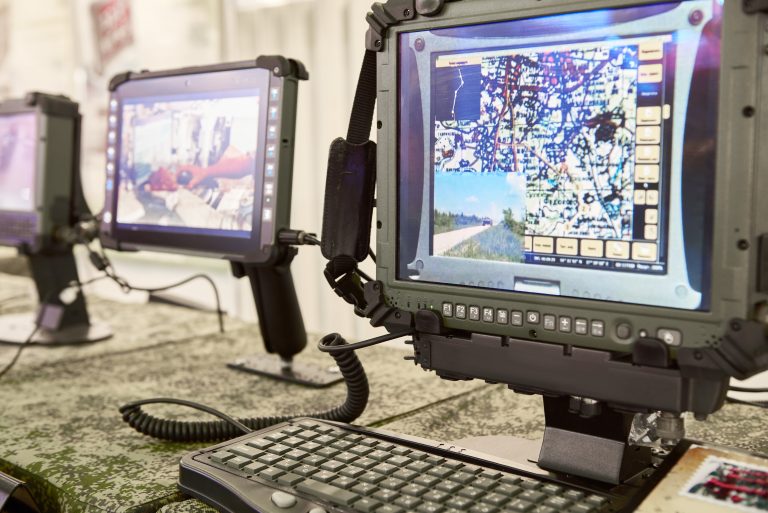
A field technician checks a reading at noon on an open job site. The same instrument is used that evening inside an unlit utility vault. A delivery terminal moves from a sunlit loading dock into a dim trailer. Commercial and industrial equipment rarely lives in one lighting condition, yet many products ship with a display built for only one.
The result is predictable. Screens wash out in sunlight, go dark when the backlight dims to save battery, or drain power when the backlight runs at full output all day. For OEMs and equipment builders, that means support calls, field errors, and shorter battery life.
An all-light-readable display solves this by using ambient light when it is plentiful and internal light when it is not. E3 Displays builds these solutions by combining four tools: well-designed LED backlight rails, careful LED component selection, optical bonding, and film enhancements. Together, they reduce internal and surface reflections, protect contrast, and lower the power needed to stay readable.
This guide explains how reflective and transflective LCD technologies work, how lighting and surface treatments extend their range, and how to match a configuration to the light your equipment actually sees.
Key Takeaway
A transflective display or reflective LCD monitor stays readable from direct sunlight to darkness only when the polarizer, lighting system, and surface treatments are engineered together. E3 Displays combines LED backlight rails, LED component selection, optical bonding, and film enhancements to deliver all-light readability with lower backlight power.
What Reflective and Transflective LCD Displays Are
Every LCD controls light; it does not create it. The difference between display types is where that light comes from. A transmissive LCD depends entirely on a backlight. A reflective LCD depends on ambient light. A transflective display uses both. The polarizer on the rear of the LCD determines the panel’s behavior.
How a Reflective LCD Uses Ambient Light
A reflective LCD places a reflective polarizer behind the liquid crystal layer. Light from the sun or overhead fixtures enters the front of the display, passes through the liquid crystal, and bounces back toward the viewer. The liquid crystal modulates that returning light to form the image.
Because the display borrows light rather than generating it, readability improves as the environment gets brighter. Direct sunlight, which overwhelms a standard backlit screen, actually sharpens contrast on a reflective panel. Power draw and heat stay low because it doesn’t need a backlight in daylight. That efficiency is the starting point for glare-free, low-power reflective monitors.
The trade-off is low light. A reflective polarizer blocks light from behind, so a conventional backlight cannot illuminate it. In a dark room, an unlit reflective LCD monitor is difficult or impossible to read. Reflective designs are best suited to monochrome content, since they only reflect available light.
How a Transflective Display Combines Reflection and Backlighting
A transflective display uses a hybrid polarizer that reflects some incoming ambient light while letting some backlight pass through. It behaves like a reflective display in bright conditions and like a transmissive display in the dark.
In practice, that means the backlight can be switched off in bright conditions, and the screen stays readable. When the equipment moves into poor light, the backlight is turned on, and the image stays visible. This is why most battery-powered products that require a backlight use a transflective polarizer: the backlight runs only when needed. The engineering behind dual-mode transflective displays explains how the hybrid polarizer manages that switch.
The compromise is peak brightness. Because a transflective polarizer reflects some light, less of the backlight reaches the viewer than it would through a transmissive polarizer. E3 Displays addresses this gap through backlight design, LED selection, and surface treatments, covered below.
Reflective, Transmissive, and Transflective Polarizers at a Glance
The polarizer choice sets the baseline for readability, power draw, and backlight dependence. Use this summary as a starting point.
| Polarizer | Sunlight readability | Low light readability | Backlight dependence | Best light conditions |
|---|---|---|---|---|
| Reflective | Excellent; contrast improves as ambient light rises | Poor without a front light or side-lit LEDs | None in daylight; a standard backlight cannot pass through | Outdoor, high ambient light |
| Transmissive | Limited; image can look washed out without AR films | Excellent | Full; unreadable with the backlight off | Consistent low light or indoor |
| Transflective | Good; uses reflected ambient light | Good with the backlight on | Partial; backlight runs only when needed | Mixed or changing light, battery-powered equipment |
For a deeper side-by-side breakdown, see Choosing the Right Display: Reflective, Transmissive, or Transflective and How to Enhance Visibility with Reflective and Transflective LCDs.
Lighting Options for Reading Reflective Displays in Low Light
A reflective LCD monitor is unmatched in sunlight, but most commercial and industrial equipment also runs at dawn, at night, or indoors. The answer is not to abandon reflective technology. Instead, add the right internal light source in the right position.
Front Lights and Backlights for Reflective LCDs
E3 Displays can add front lights or backlights to reflective LCDs so you can read them in dark environments. A front light sits in front of the reflective layer and directs light down onto it, so the reflective polarizer returns that light to the viewer just as it would with sunlight. This preserves the reflective panel’s daylight performance while making it usable at night.
For memory LCD display modules (MLCD), E3 Displays offers backlit and frontlit options built on a lightweight two-glass design with an integrated driver. That combination keeps the module profile exceptionally thin, which matters in handheld and wearable products where every millimeter of stack height counts.
Side Lit and Edge Lit Configurations
A conventional backlight cannot shine through a reflective polarizer. A side-lit or edge-lit LED design avoids this by placing the LEDs above the reflective polarizer rather than behind it. Light enters from the edge and spreads across the display surface, then reflects back toward the viewer.
This configuration is popular for two reasons. It preserves the sharp contrast of a reflective panel, and it is thinner in the Z-axis than an LCD with a full backlight. For compact measurement tools and slim instruments, a side-lit reflective design often delivers the best balance of readability and size.
High Efficiency LED Backlight Rails
For transflective and transmissive panels, the backlight itself is often the weak point. Factory backlights in many standard LCD modules are not designed around a specific power budget or brightness target.
E3 Displays can add high-efficiency LED backlight rails to low-luminance displays. This offers a simpler, lower-cost alternative to replacing lamps and power sources in an existing LCD panel. Backlighting can also be redesigned to fit a defined power budget, which is usually the main concern in mobile, battery-powered applications.
LED component selection is a major part of this work. Choosing the right LEDs and driving them correctly often lets an E3 Displays backlight system maintain the same brightness at a much lower power level than the factory system. Lower drive current also helps extend backlight half-life, which we cover later in this guide. Our breakdown of how to enhance visibility on reflective and transflective LCDs covers where backlight upgrades fit alongside polarizer and surface choices.
Surface Enhancements That Protect Contrast
Sunlight readability is as much a contrast problem as a brightness problem. Every reflection off the cover glass, touch panel, or air gap adds stray light on top of the image and lowers effective contrast. Surface enhancements attack those reflections directly, which is why they are often the most power-efficient way to improve an all-light-readable display.
Antireflective, Antiglare, and Antifingerprint Treatments
E3 Displays can add filters with antireflective (AR), antiglare (AG), and anti-smudge or antifingerprint (AS/AF) properties. These can be applied as coated glass or as a film laminated to the display.
- Antireflective (AR): Reduces specular reflections so operators do not see their own reflection or bright objects mirrored on the screen. The image appears brighter and more vivid for the same backlight output.
- Antiglare (AG): Uses a textured surface that scatters reflected light at different angles. This prevents hard glare from bright light sources, such as the sun or overhead fixtures, from washing out the content.
- Antifingerprint (AF/AS): Reduces the cover lens’s ability to hold skin oils. On touch equipment handled all shift, this keeps the screen clear of smudges that scatter light and reduce contrast.
AR and AG are often combined, and the right balance depends on the viewing angle, ambient light direction, and touch use. E3 Displays can also add AR films to transmissive displays to limit outdoor reflections when a transmissive panel must be retained.
Film Lamination and Optical Bonding
The largest source of internal reflection in many display stacks is the air gap between the LCD and its cover glass or touch panel. Light reflects at every interface where the refractive index changes, so an air gap creates two extra reflective surfaces.
Optical bonding removes that gap. E3 Displays attaches the cover layer, whether glass, plastic, filter, or touch panel, directly to the LCD with an optical-grade adhesive. The adhesive matches the refractive index between layers and greatly reduces internal reflections. E3 Displays bonds exclusively with E3 Materials urethane acrylate adhesives, developed for display-specific applications. Our breakdown of the optical bonding process and its benefits covers how the adhesive is applied and what it changes in the stack.
Optical bonding also adds durability. A bonded stack resists impact, vibration, and condensation forming inside the gap, supporting reliability in rugged commercial and industrial use.
Film lamination complements bonding. Contrast enhancement films laminated to the display further suppress reflected light. According to E3 Displays, pairing a transflective polarizer with optical bonding and contrast-enhancement film lamination creates a superior, all-light-readable display with extended battery life and reliability.
When Passive Readability Needs Active High Brightness
Passive enhancements such as brightness enhancement films and AR and AG treatments improve visibility without adding power. In many reflective and transflective designs, they are enough. Some applications, however, need active high brightness to deliver the best possible screen visibility in outdoor, high ambient light conditions.
E3 Displays offers high-brightness display solutions up to 2500 nits for the brightest viewing environments, along with lower nit options for indoor use. The goal is balance. A display that is too dim in sunlight causes eye strain and misreads, while one that is too bright indoors wastes power and creates discomfort.
High brightness works best when combined with the passive enhancements above. Optical bonding and AR treatments reduce reflected light that competes with the image, so the backlight doesn’t have to work as hard to reach the same perceived contrast. That combination means E3 Displays delivers high brightness while limiting backlight power drain.
For equipment that must stay on around the clock, all E3 Displays light-readable solutions support 24/7 use, making them suitable for continuously operating commercial installations.
Display Technologies E3 Displays Offer All Light Readability
E3 Displays offers out-of-the-box TFT solutions, memory LCDs, and high-brightness displays that use reflective technology or increased LED backlighting for a sharper image in direct sunlight. E3 Displays also enhances displays across all technologies, so customers can upgrade existing panels rather than replace them.
TFT displays. TFT (thin-film transistor) LCDs are active-matrix displays with one to four transistors controlling each pixel. That control delivers faster switching, smoother motion, sharper contrast, and accurate color. TFT panels from E3 Displays are available in sizes up to 86.0″ with resolutions up to 4K and wide viewing cone options. Paired with a reflective polarizer, LED backlight rails, and optical bonding, a TFT becomes a fully colored, all-light-readable display.
Memory LCD (MLCD). Memory LCDs retain the image at each pixel with very little power, making them a strong fit for battery-powered and wearable products. E3 Displays offers a lightweight two-glass MLCD design with an integrated driver for an exceptionally thin module profile. You can add front lights or backlights so the reflective MLCD remains readable in the dark. E3 Displays offers MLCDs in color or monochrome. For low-power devices, the decision often comes down to memory LCD vs. transflective TFT on power, color, and motion.
Commercial and Industrial Applications for Reflective LCD Monitors
Reflective and transflective displays fit anywhere readability and power efficiency both matter. These are the application areas where an all-light-readable display delivers the clearest return.
Measurement tools. Test and measurement equipment is often used outdoors, on job sites, and in poorly lit plant areas. A reflective LCD with a side-lit or front-lit option keeps readings legible in every condition while preserving battery life between charges.
Handheld field instruments. Inspectors, surveyors, and service technicians carry instruments between bright exteriors and dark interiors many times a shift. A transflective display lets the backlight switch off outdoors and on indoors, so operators never lose the screen.
Outdoor battery-powered equipment. Remote terminals, outdoor controls, and portable equipment cannot afford a backlight running at full output all day. Most battery-powered products that require a backlight use a transflective polarizer, and pairing it with E3 Displays LED backlight rails and passive enhancements extends runtime further.
Commercial and medical wearables. Wearable electronics are one of the most common uses for reflective LCD technology. The thin, low-power MLCD module with an integrated driver suits wrist-worn and body-worn devices where weight and battery size are tightly constrained.
Size, Resolution, and Power Planning
Early decisions on size, resolution, and backlight power shape every later choice in the display stack. Settle them before selecting a panel. They belong on the list of questions to settle before specifying a transflective display for battery-powered equipment.
Size range. E3 Displays can enhance displays to be fully readable from 1.0″ to 100.0″. That covers compact wearables and handheld tools through large-format commercial installations. TFT panels are available up to 86.0″.
Resolution. E3 Displays offers full definition up to 4K resolution on TFT technology. Higher resolution improves legibility of fine text and detailed graphics, but it can also reduce panel transmission, increasing the backlight power needed for the same brightness. Weigh what you need to show against the power you can afford.
Backlight power budget. For battery-powered equipment, the backlight is usually the largest single consumer of display power. Define the budget first, then design the backlight to fit it. E3 Displays can replace display backlighting to meet a power budget, and its backlight systems can often deliver the same brightness at much lower power than the factory system. Every passive enhancement, from optical bonding to AR film, reduces the light the backlight has to supply, which lowers the budget further.
Matching the Display Configuration to Your Light Environment
Start with where the equipment spends most of its operating hours, then plan for the worst case it will see.
- Mostly outdoors, high ambient light: Reflective LCD with AR/AG treatments; add a front light or side-lit LEDs if night use is possible.
- Mixed or changing light: Transflective display with optical bonding and contrast enhancement film; backlight runs only when needed.
- Consistent low light or indoor: Transmissive panel with an efficient LED backlight; add AR film if occasional sunlight is expected.
- Direct sunlight with color and video: TFT with high brightness backlighting up to 2500 nits, optically bonded with AR treatment.
Common Readability Mistakes in Reflective and Transflective Designs
Most readability problems found in the field trace back to a handful of specification decisions. Avoid these four.
1. Using a transmissive panel in outdoor battery-powered equipment. A transmissive display cannot be read with the backlight off and tends to wash out in sunlight. To compensate, the backlight must run at high output all day, which drains the battery. A transflective polarizer lets the device use ambient light outdoors and save the backlight for low light.
2. Adding an unbonded touch layer. Placing a touch panel over the LCD with an air gap adds reflective interfaces that scatter ambient light and cut contrast. On a reflective or transflective display, those losses directly undermine readability in sunlight. Optically bonding the touch panel to the LCD removes the gap and restores contrast. The full effect of each added layer is explained in how touch panels and cover glass affect reflective and transflective LCD readability.
3. Assuming brightness alone solves sunlight readability. Raising nits without controlling reflections often produces a brighter but still washed-out image, along with higher power draw and heat. Readability depends on contrast against reflected light. Optical bonding, AR/AG treatments, and film lamination should come first, with active high brightness added where those passive steps are not enough.
4. Overlooking backlight half-life. LED backlights dim over time, and a display that is barely readable on day one will fall short well before the end of the product’s service life. Polarizer selection affects how hard the backlight must work. With a transmissive polarizer, E3 Displays notes that LED driving current can be reduced to extend backlight half-life, and the same principle applies to any configuration where passive enhancements reduce the light the backlight must supply. Plan for end-of-life brightness, not just initial brightness.
Engineering Guidance Snapshot (EGS)
Spec contrast before brightness. When an all-light-readable display falls short in the field, the fix is rarely more than nits. Start by removing reflections: optically bond the cover glass and touch panel, then choose AR, AG, or both based on light direction. Next, pick the polarizer for the environment where the equipment spends most of its hours, with a transflective polarizer as the default for battery-powered products that need a backlight. Then size the backlight using high-efficiency LED rails and LED selection to hit the brightness target within the power budget. Finally, design for end-of-life brightness so the display still meets spec after years of service.
Conclusion: Build One Display for Every Light Condition
A transflective display or reflective LCD monitor gives commercial and industrial equipment a strong foundation for readability in all lighting conditions. The final result depends on how the full stack works together: the polarizer, the front light or backlight, the LED components, optical bonding, and surface film enhancements. Get those choices right, and the same screen stays readable at noon and at midnight, with less backlight power and longer battery life.
E3 Displays works side by side with OEMs to create custom, out-of-the-box display solutions, from compact MLCD modules to TFT panels up to 4K, with US-based technical support to help with brightness and power trade-offs. See how custom display solutions improve the end-user experience across different equipment types.
Ready to specify your next all-light-readable display? Use the E3 Displays guide to get started, or contact us to talk with the engineering team about your application.