


NVIS Displays for Goggles, Computers and Mission Systems
All of our NVIS display systems can be optically bonded to improve the visibility and durability of the display in the most rugged environments. E3 Displays NVIS enhancement ensures that all missions are completed timely and safely.
How Do NVIS Night Vision Displays Work?
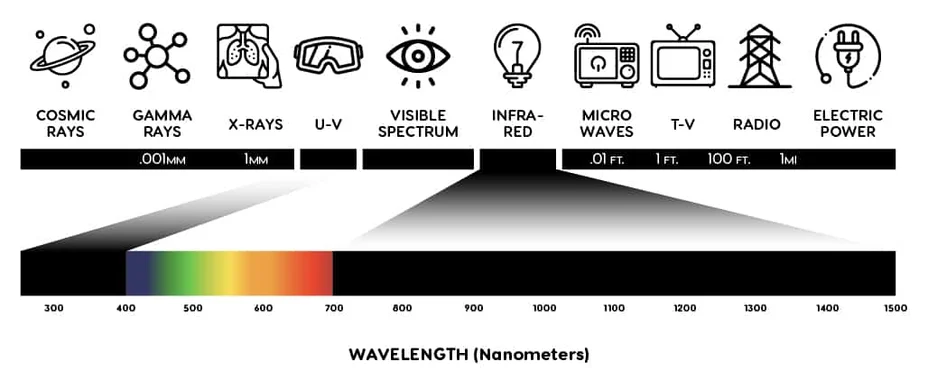
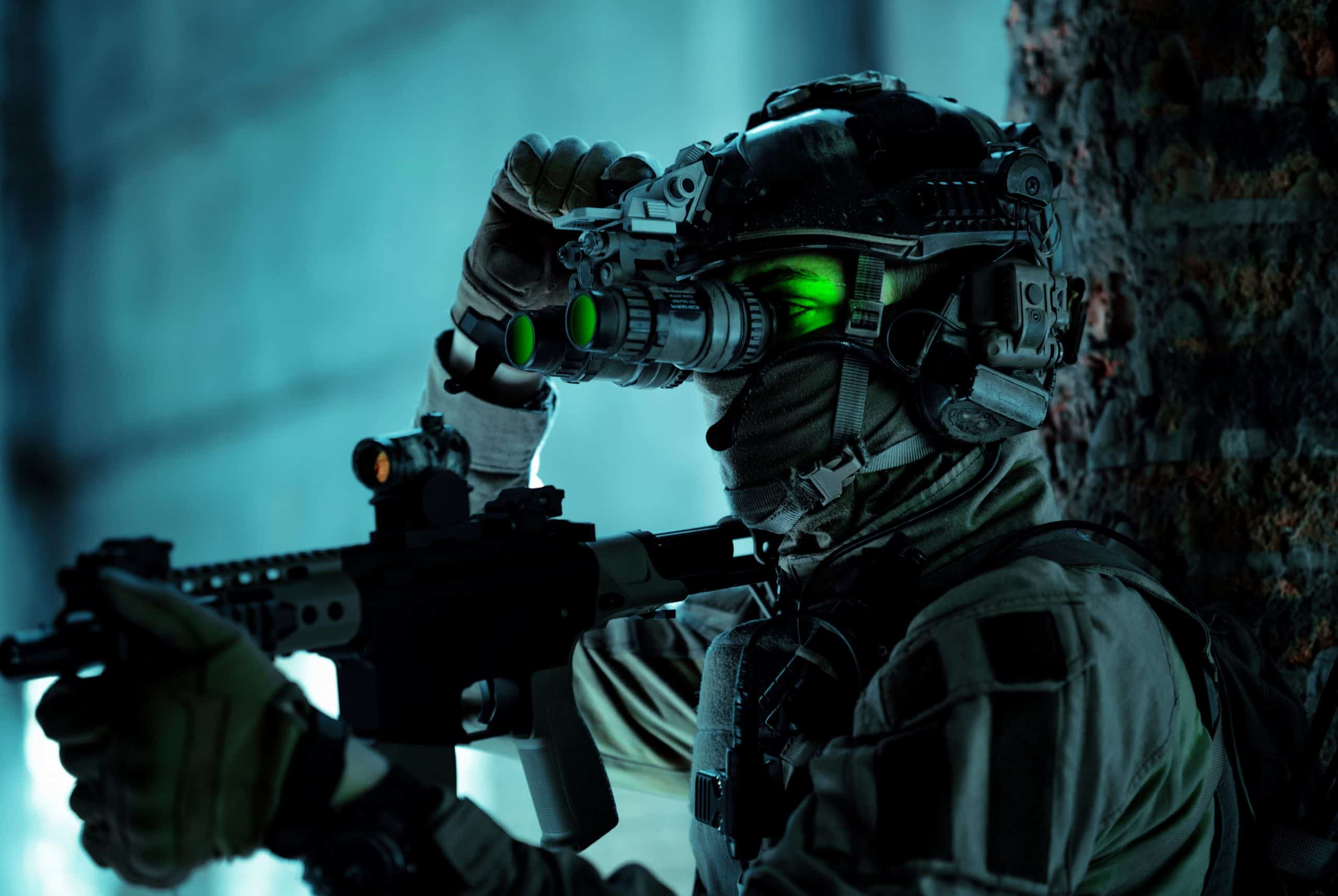
Night vision goggles work by intensifying very small amounts of ambient light — starlight, moonlight and near-infrared energy — into a visible image. They are most sensitive in the red and near-infrared part of the spectrum, so even a modest light leak in that band looks like a floodlight through the goggles.
A standard LCD display emits high levels of IR radiation causing interferences with the Night Vision Imaging Systems. Through the goggles, the screen blooms into a bright halo, the goggle’s automatic gain drops, and the outside scene goes dark — exactly when the operator needs it most.
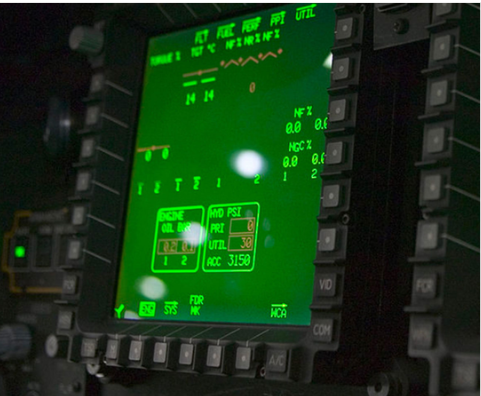
To prevent this and image distortion, NVIS display solutions are usually TFT displays that emit very low levels of IR. This lets the operator read the display with the naked eye, glancing under or around the goggles, without degrading the NVG image. The illumination from the display is also low enough to be virtually undetectable at an extended distance.
How E3 Makes a Display NVIS Compatible: 6 Steps
NVIS Display vs. Standard Display
| Feature | Standard LCD display | E3 NVIS display / NVIS monitor |
|---|---|---|
| Near-infrared emission | High, from an unfiltered backlight | Very low, via NVIS filter or NVIS-designed light source |
| Seen through NVGs | Blooms; people see in drops; outside scene darkens | Readable without degrading the goggle image |
| Dimming range | Limited at the low end | Wide-range dimming from daylight to night levels |
| Daylight readability | Varies by panel | Up to 2,500 nits, with optical bonding |
| Detectability at distance | Visible glow | Virtually undetectable at extended distance |
| Governing standard | None for NVIS | MIL-STD-3009 |
| Typical use | Office and consumer devices | Cockpits, military vehicles, marine bridges, tactical devices |
Common Applications of NVIS Displays
NVIS displays and NVIS monitors are used wherever operators need instrument data in the dark without giving up their night vision:
- Cockpit and avionics instruments
- Military ground vehicle displays
- Navigation
- Surveillance
- Identification
- Tactical and portable handheld devices
- Mining
- Construction
- Diagnostics
- Search and Rescue
- Marine navigation
- Hunting
NVIS Displays by Industry
NVIS Filters: Make Your Existing Display Night Vision Compatible
You don’t always need a new display or an entirely new backlight system. As an NVIS display manufacturer, E3 Displays can add an NVIS filter to your existing display.
Most NVIS programs require one display to perform in daylight and at night, with or without goggles. An NVIS filter helps deliver that dual-mode performance while meeting MIL-STD-3009 requirements.
NVIS filters can be installed into the front or backlight assembly of most displays. Filter color selection can be chosen based on transmission, light source, and infrared noise requirements.
NVIS Filter or Full NVIS Redesign: Which Do You Need?
- Choose an NVIS filter when your current display already meets size, brightness and environmental needs and you want a faster, lower-cost path to night vision compatibility.
- Choose a full NVIS design when backlight IR output is too high to filter efficiently, the program needs a specific NVIS Class or color performance, or the unit also needs touch, bonding or ruggedization. Our custom display design team handles both paths.
What is MIL-STD 3009
Lighting, Aircraft, Night Vision Imaging Systems (NVIS) Compatible
MIL-STD-3009 is the U.S. Department of Defense standard for NVIS-compatible aircraft lighting and displays. It limits NVIS radiance — the energy a light source emits in the band night vision goggles detect — and defines chromaticity for NVIS colors, so cockpit lighting and displays do not degrade goggle performance. It replaced the earlier MIL-L-85762A specification.
This standard was created for military aircraft and display equipment that use Night Vision Imaging Systems (NVIS) technology. The specific performance requirements stated in MIL-STD 3009 are created by the Department of Defense and approved for use by the United States Air Force and all other Departments and Agencies of the Department of Defense. All E3 Displays NVIS solutions are designed and built to meet MIL-STD-3009 requirements.
MIL-STD-3009 NVIS Types and Classes Explained
| Designation | What it means | Where it applies |
|---|---|---|
| Type I | Direct-view goggles: the pilot looks at the intensified image directly | Most helicopter and fixed-wing cockpits |
| Type II | Projected-image goggles: the intensified image is projected onto a combiner in the line of sight | Cockpits where crews view instruments through the combiner |
| Class A | Goggles with a 625 nm minus-blue filter | Cockpits using green and blue-green lighting; red displays are restricted |
| Class B | Goggles with a 665 nm filter | Cockpits that need color displays, including some red and yellow |
| Class C | Goggles with a “leaky green” filter that passes a narrow green band | Aircraft with head-up display (HUD) symbology viewed through goggles |
The standard also defines NVIS colors — NVIS Green A, NVIS Green B, NVIS Yellow, NVIS Red and NVIS White. E3 engineers confirm the Type, Class and color requirements of your program before design begins. For a deeper look at combat use cases, read what an NVIS display is and how it performs in low-light combat environments.
Related Standards Our NVIS Displays Are Built Around
- MIL-STD-810 – environmental durability (shock, vibration, temperature, humidity)
- MIL-STD-461 – electromagnetic interference control
- DO-160 – environmental conditions for airborne equipment (DO-160 capable)
- AS9100D and ISO 9001:2015 – aerospace and general quality management
- ITAR registration – for U.S. defense programs
Benefits of Night Vision Displays
Ultra Low Power Consumption
We took the focus away from the technology and redirected it towards your goals. Because we focus on passive enhancements and limiting backlight power drainage, your display will last longer and have continuous reliability when you need it most. Lower backlight drive also means less heat and longer backlight life — critical for battery-powered and portable NVIS devices.
Viewing Angles up to 89 Degrees
Not everyone that views your display is going to view it from a perfect dead on angle. E3 produces wide viewing angle displays with every viewer and the surrounding environment in mind so you can have optimum impact. In a two-seat cockpit or a crowded vehicle console, that means the co-pilot or second operator sees the same clear image.
All Light Readability
Displays that are not built for the right environment can cause strain in the viewer's eyes. E3 Displays can produce up to 2500 nits for the brightest viewing environments and lower nit displays for indoor viewing to create the best viewer experience. Our sunlight readable displays and all light readability displays pair with NVIS dimming, so one unit serves both daylight and night vision operations.
Extended Wide Temperature
E3 NVIS displays can be engineered as wide temperature displays for wide temperature and humidity ranges. Heat dissipation is the key to measuring display performance. The heat generated by the operation of the display is dissipated through optical material and is not blocked by insulating air layers. By filling the insulating air gap between the components, heat can be transferred to the outside environment.
Rugged, Optically Bonded Construction
E3’s proprietary LOCA optical bonding removes the air gap where dust, moisture and condensation collect, and improves resistance to shock, vibration and impact. Combined with component potting and vibration mitigation, our rugged displays are built for military vehicles, aircraft and marine decks.
Glove-Friendly Touch and EMI Protection
Custom PCAP touchscreens support heavy glove use and resist false touches from liquid splashes. EMI shielding keeps the display from interfering with radios, avionics and other mission electronics.
Long-Term Availability
Defense and aerospace programs run for decades. E3’s lifecycle and obsolescence management backs a 20-year availability guarantee, so you are not forced into requalification when a panel goes end-of-life.
Why Choose E3 Displays as Your NVIS Display Manufacturer?
- Experience: more than 20 years designing mission-critical displays for military and commercial aircraft, with engineering heritage that traces back to Honeywell Avionics.
- One partner, complete solution: NVIS, optical bonding, touch, EMI shielding, thermal management and chassis or computing integration in-house — no integration sub-contractors.
- U.S. manufacturing: production in a Class 10K cleanroom in Phoenix, Arizona.
- Compliance: ITAR registered, ISO 9001:2015, AS9100D and ISO 13485 — see our certifications and compliance.
- Proven at scale: 50,000 units on active military contract.
- Quality you can see: zero pixel inspection before shipment, with program results documented in our display case studies.
How to Specify Your NVIS Display or NVIS Monitor
Have these details ready to shorten the design cycle:
- Night vision goggle model and the NVIS Type and Class required
- Display size, aspect ratio and resolution
- Maximum daylight brightness (nits) and minimum night luminance
- Touch needs, including glove use
- Operating environment: temperature, humidity, shock, vibration and EMI
- Mechanical integration: bezel, chassis, mounting and connectors
- Quantities, program length and lifecycle requirements

Get a MIL-STD-3009 Compliant Night Vision Display Built for Your Mission
Our Experienced Team is Ready to Help
Our E3 Displays team has expertise in every type of display technology, whether big or small. We will help you choose or design the display that best fits your needs, while always keeping quality and budget in mind. Here at E3 Displays, we specialize in custom displays use our product selection guide today to get started on your project today!