
Low-power industrial devices often face a display decision: memory LCD or transflective TFT. Both use reflected ambient light to save power, but they work differently and suit different commercial and industrial products. This memory LCD vs. transflective comparison explains how each technology behaves, where each wins, and which questions settle the choice.
People Also Ask
Is a memory in pixel display readable in sunlight?
Yes. A memory in pixel display is reflective, so it uses ambient light and stays high contrast in bright conditions.
Can a memory LCD be read in the dark?
Yes, with a front light or backlight. E3 Displays can add either to reflective displays, including memory LCDs.
Which uses less power in the memory lcd vs. transflective comparison?
For mostly static content, memory LCDs usually use less power because pixels hold the image without constant refresh. With constantly changing content, the difference narrows.
Can a transflective TFT show video?
Yes. A transflective TFT supports full color and smooth motion, making it suited to video and rich interfaces.
How a Memory in Pixel LCD Holds an Image
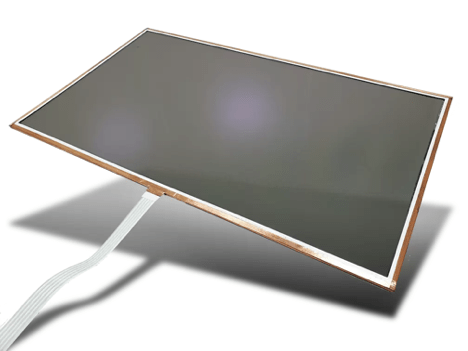
A memory in a pixel display embeds 1-bit memory inside each pixel. Once an image is written, the pixel holds its state without continuous refreshing, so a static screen draws very little power. The display is reflective, using ambient light to form a high-contrast image without a backlight in daylight.
E3 Displays offers a lightweight two-glass memory in pixel display design paired with an integrated driver, giving an exceptionally thin module profile.
How a Transflective TFT Switches Between Reflective and Transmissive Modes
A transflective TFT uses a hybrid polarizer that reflects some ambient light and transmits some backlight. In bright conditions, it runs reflectively with the backlight off. In low light, the backlight turns on, and the panel behaves like a transmissive display. The TFT active matrix controls each pixel with one to four transistors, supporting full color and smooth motion.
Memory LCD and Transflective TFT Comparison Table
| Attribute | Memory LCD (memory in pixel) | Transflective TFT |
|---|---|---|
| Static image power | Very low; pixels hold the image without constant refresh | Higher; panel and driver run continuously, backlight optional in good light |
| Update and motion handling | Fast enough for motion on a small display, best for periodic updates | Smooth motion and video through active matrix control |
| Color depth | 1-bit per pixel memory; high contrast | Full color |
| Typical sizes | Small format | Up to 86.0″ with E3 Displays |
| Interface | Simple 3-wire interface, single power supply | Various interface types offered |
| Low light options | Front light or backlight added | Integrated backlight, LED rails |
| Viewing angle | Wide | Wide viewing cone options |
| Typical applications | Wearables, handheld measurement tools, static readouts | Richer HMI, color graphics, mixed light equipment |
Power Consumption During Static Images and Frequent Updates
For static content, a memory in pixel display has a clear advantage. The image stays in pixel memory, so power is spent mainly when content changes. A device showing a reading that updates every few seconds can run far longer on the same battery.
A transflective TFT saves power differently. Its backlight can stay off in good ambient light, but the panel and driver keep refreshing. When content changes constantly, that gap narrows, because both technologies spend energy on updates. E3 Displays can further cut transflective TFT power with high-efficiency LED backlight rails designed to a defined power budget.
Color Depth, Resolution, and Motion Content
A transflective TFT supports full color and, with E3 Displays, resolutions up to 4K. It handles video, animated graphics, and dense interfaces well.
A memory in pixel display stores 1 bit per pixel, which favors crisp, high-contrast text, icons and simple graphics. E3 Displays notes its MLCD response time is fast enough for motion video on a small display, but large, color-rich content is a transflective TFT strength.
Low Light Reading Options for Each Technology
Both need help in the dark. E3 Displays can add front lights or backlights to reflective displays, including backlit memory displays, so a memory in pixel display stays readable at night. Read our guide to reading reflective LCDs from noon to midnight for every lighting option.
A transflective TFT already includes a backlight behind its hybrid polarizer. Because that polarizer reflects some light, the backlight appears dimmer than it would on a transmissive panel. E3 Displays can raise output through LED component selection and backlight design.
Integration Considerations for Interface, Drivers, Touch, and Bonding
E3 Displays MLCDs use a simple 3-wire interface and single power supply, with an integrated driver that keeps the module thin. A transflective TFT typically needs a more capable display controller and more board space.
E3 Displays provides touch and optical bonding services for both. On MLCDs, E3 Displays bonding improves shock and vibration resistance to 1.5–2 G and improves visual quality. On a transflective TFT, bonding removes the air gap and protects contrast in sunlight. Read our breakdown of how cover glass and touch layers affect readability.
Applications Where Each Technology Fits Best
Memory in pixel display: parking meters, handheld measurement tools and field instruments, wearables, and always-on status readouts. These products show mostly static values, run on batteries, and benefit from a thin, light module.
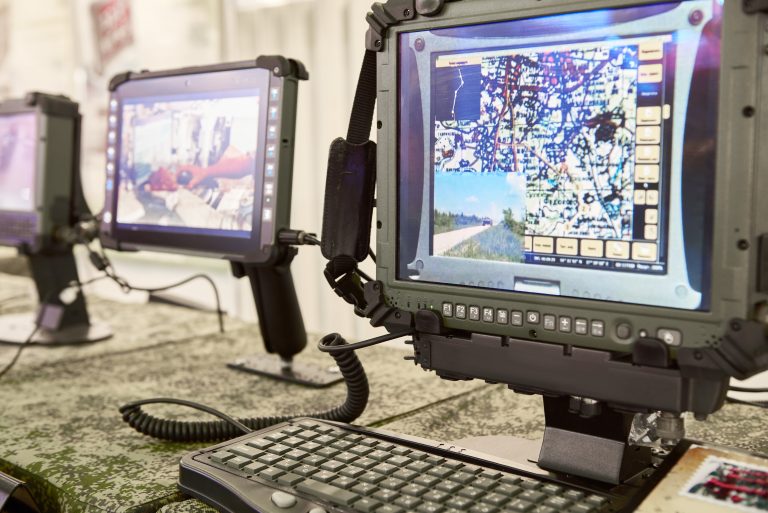
Transflective TFT: equipment that needs a richer interface, such as color HMIs, maps, trend graphs, menus, or video, used in mixed indoor and outdoor light. Larger screens and touch-driven workflows also point to a transflective TFT.
Questions That Help You Decide Between the Two
- Is the content mostly static, or does it change continuously?
- Do operators need full color, or is high-contrast monochrome enough?
- What screen size does the product require?
- How much of the duty cycle runs in low light?
- What is the battery capacity and target runtime?
- Is a touch panel or cover lens required?
Mostly static, small, and battery-limited answers favor a memory in pixel display. Color, motion, larger sizes, and touch interaction favor a transflective TFT. If a transflective TFT wins, work through the questions to ask before specifying a transflective display next.
Conclusion
The memory lcd vs transflective choice comes down to content, color, size, and power. A memory in pixel display suits static, battery-limited devices, while a transflective TFT serves richer interfaces in changing light. Explore E3 Displays’ memory displays for the full picture on readability in all lighting.