
What Optical Bonding Does for a Display
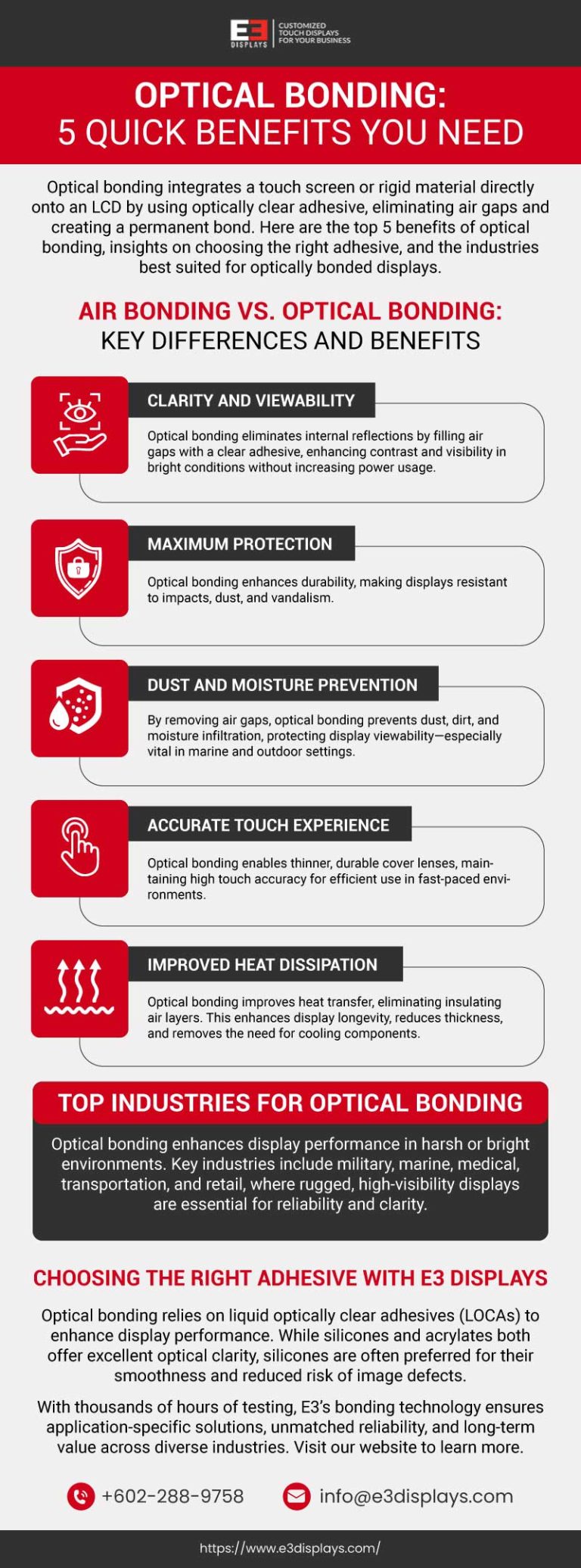
Optical bonding fills the air gap between a display and its cover glass with clear adhesive. The result is five benefits. It sharpens clarity, adds durability and blocks moisture and condensation. It also improves touch precision and helps heat escape through the front glass.
Optical bonding fills the air gap between a display and its cover glass or touch panel with a clear adhesive. Removing that gap changes how the display looks, handles and holds up in the field. Here are five benefits that matter most in rugged, outdoor and industrial applications.
Improved Display Clarity
Every glass-to-air surface reflects about 4% of incoming light, and an air-gap assembly has several. Bonding removes those internal surfaces, so less glare washes out the image. The result is sharper contrast in bright light, often without adding backlight power.
Greater Display Durability
A bonded stack acts as one solid unit instead of separate layers held at the edges. The adhesive supports the cover glass, so it resists impact, shock and vibration better. If the glass does crack, the bond helps hold the pieces in place.
Moisture and Condensation Resistance
An air gap can trap humid air that condenses when temperatures drop. Bonding fills that space completely, so there’s nowhere for fog or moisture to form. It also keeps dust from getting between the layers.
More Precise Touch Performance
With an air gap, the touch point and the image beneath it sit at different depths. Bonding removes that gap and the parallax that comes with it, so touches land where users expect. The bonded stack also flexes less under finger pressure.
Better Heat Dissipation
Air insulates, so an air gap traps heat inside the display. A bonded stack lets heat pass out through the front glass instead. That helps sunlight readable and high-brightness displays stay within their temperature limits.