Glare is one of the main reasons a display becomes hard to read in bright light. Anti-glare and anti-reflective treatments both tackle it, but they work in very different ways. Choosing the right one depends on the lighting, the viewing distance and how fine the on-screen detail is.
How Anti-Glare Works
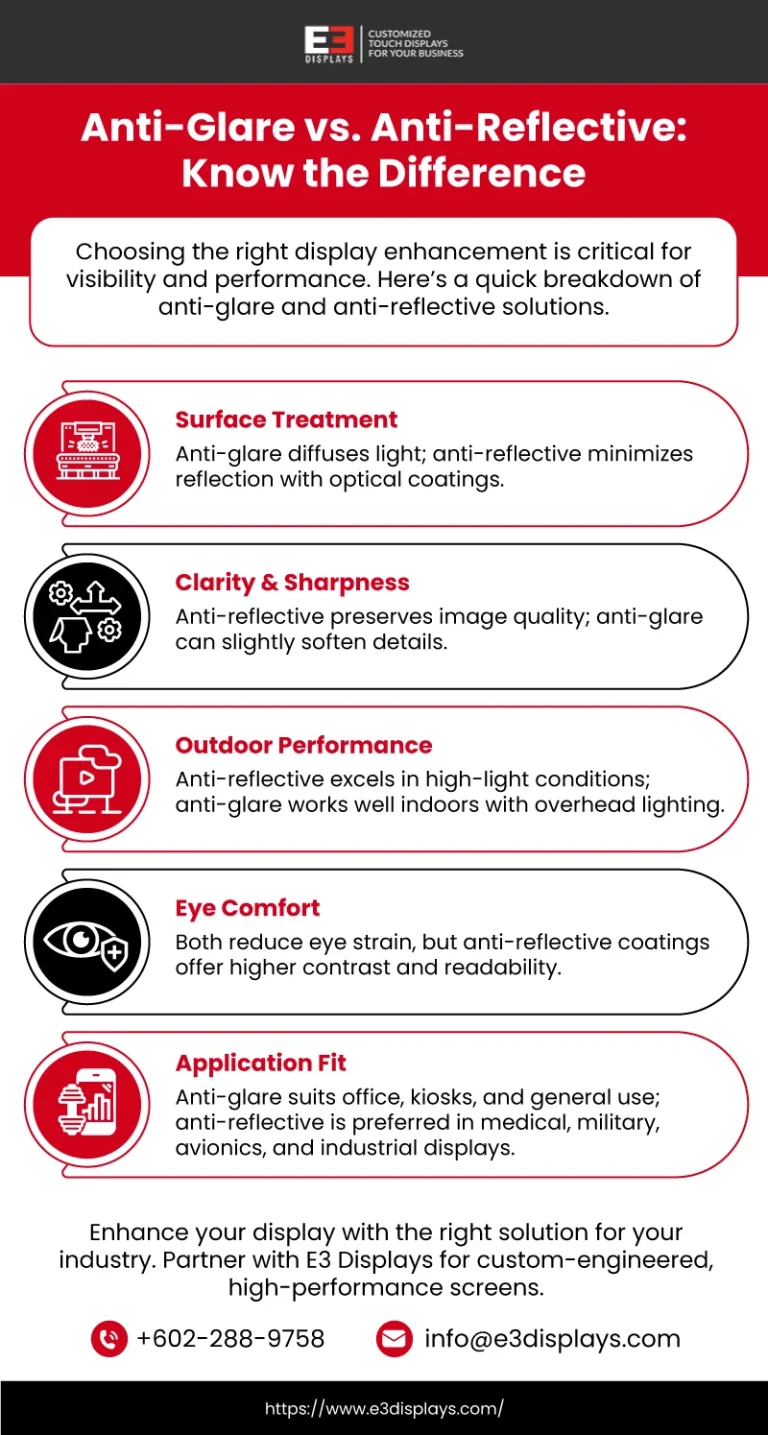
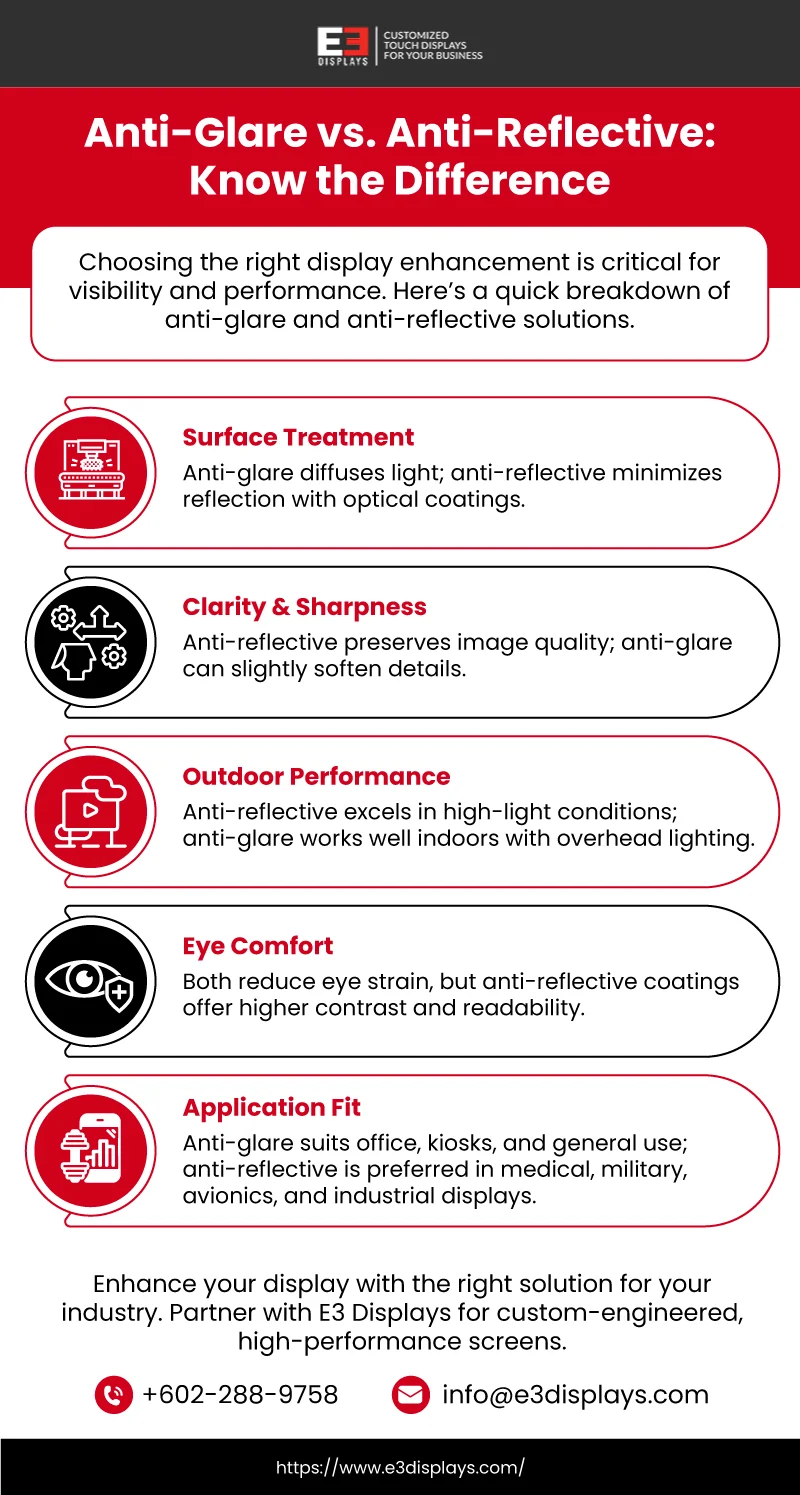
Anti-glare (AG) roughens the outer surface of the glass with a fine etched texture. Instead of bouncing back as a sharp image, reflected light scatters in many directions. The bright spot of a lamp or the sun breaks up into a soft haze, so it no longer blocks the screen.
How Anti-Reflective Works
Anti-reflective (AR) coatings use thin layers that cancel out reflected light through interference. Rather than scattering reflections, they reduce how much light reflects at all. A good AR coating cuts outer-surface reflection to about 0.2%, compared with about 4% for plain glass.
Anti-Glare vs Anti-Reflective at a Glance
| Factor | Anti-glare | Anti-reflective |
|---|---|---|
| How it works | Scatters reflected light | Cancels reflected light |
| Effect on reflections | Blurs them | Reduces them |
| Image sharpness | Slight haze can soften fine text | Keeps the image crisp |
| Contrast in bright light | Moderate gain | Strong gain |
| Fingerprints | Hides them well | Shows them more readily |
| Best fit | Touch-heavy screens and mixed indoor lighting | Outdoor and sunlight readable displays |
Swipe left or right to see the full table →
When to Choose Anti-Glare
Anti-glare suits screens that people touch often or view under overhead lighting. The textured surface hides fingerprints and smudges, and it breaks up glare from lamps and windows. The trade-off is a slight loss of sharpness, which matters most on high-resolution screens with small text.
When to Choose Anti-Reflective
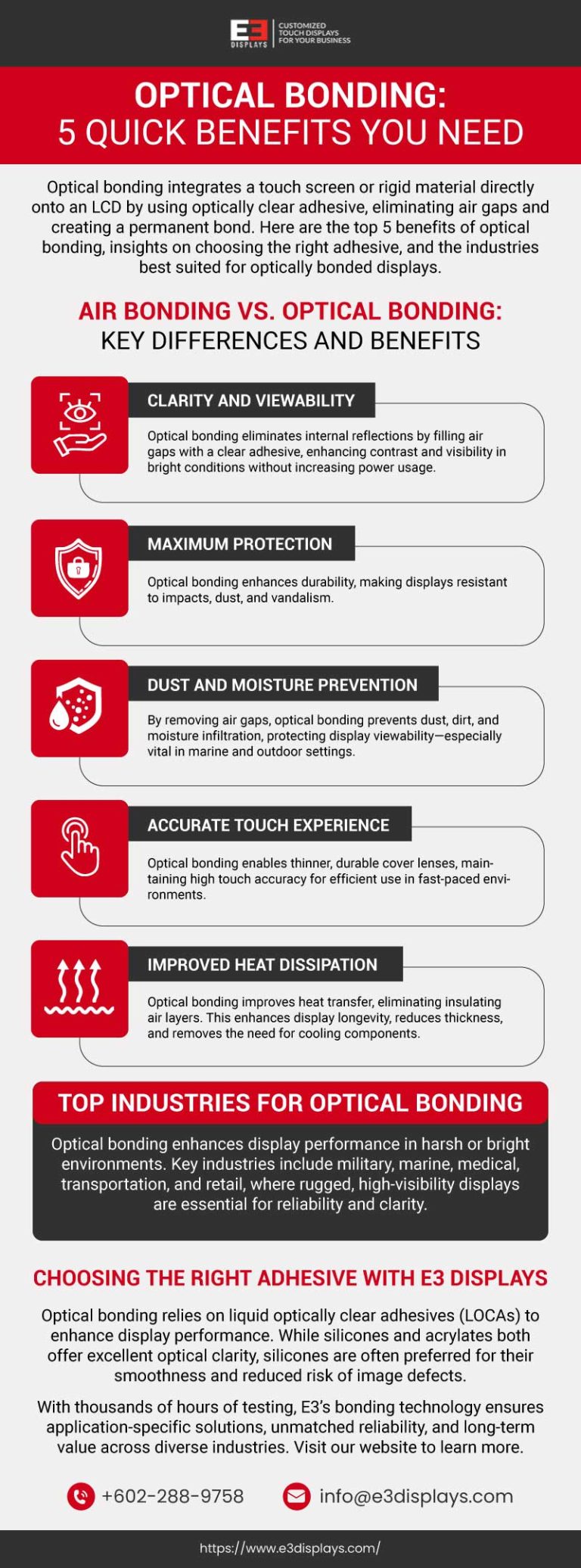
Anti-reflective suits displays used in direct sun or very bright environments. Cutting reflection keeps blacks dark and contrast high without adding backlight power. It’s the usual choice for a sunlight readable display, often paired with optical bonding to remove reflections inside the stack as well.
Using Both Together
Many outdoor and rugged displays combine the two. An AR coating does the main work of reducing reflection, while a light AG finish breaks up any remaining glare. Adding an anti-smudge layer helps keep AR surfaces clean on touchscreens.