·
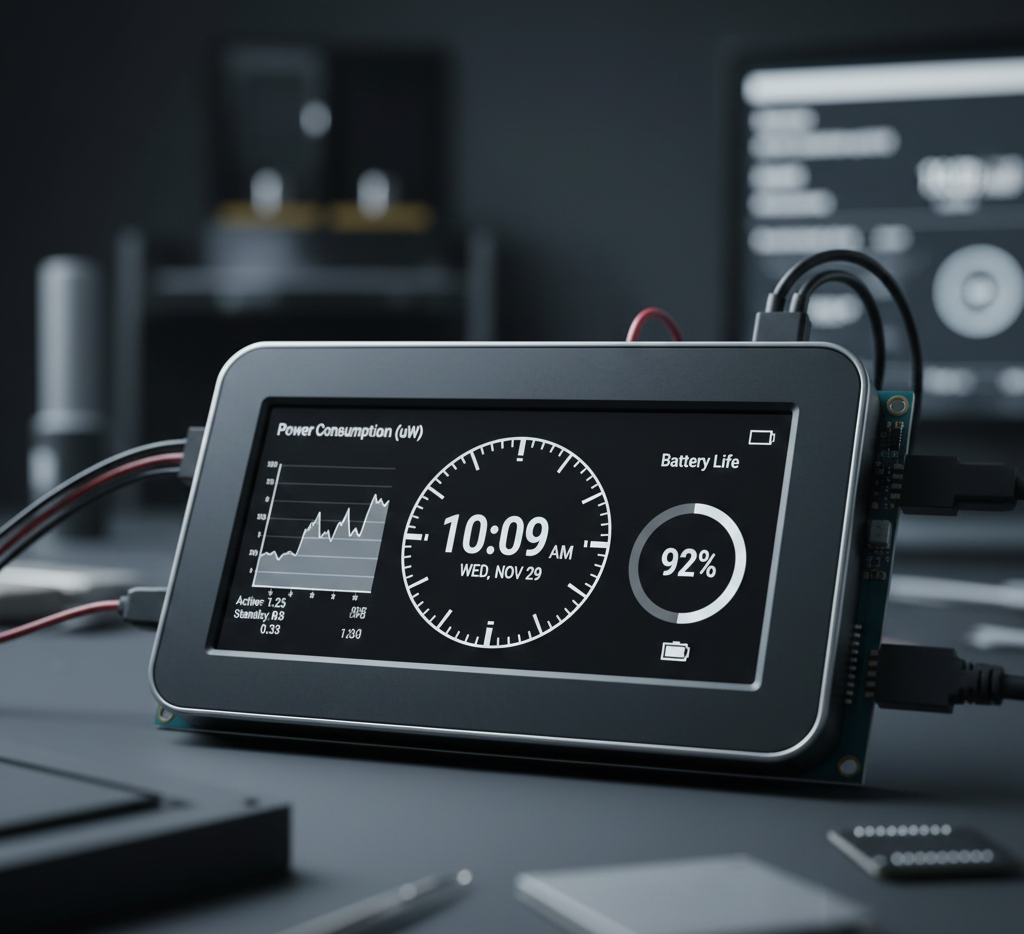
A memory in pixel display (MIP) is a type of LCD that builds a small memory circuit, typically a 1-bit SRAM cell, into every pixel. Each pixel holds its on/off state until new data arrives, so the panel does not need constant refreshing. The result is a sharp, reflective screen that can hold a static image on microwatt-level power.
Small, battery-operated devices continue to push the demand for displays that require minimal energy while maintaining crisp, easily readable visuals. This is where memory in pixel displays have gained significant attention, delivering ultra-low-power operation without sacrificing clarity. Their unique architecture allows each pixel to store its own visual data, drastically reducing the need for constant screen refresh.
As wearable technology, IoT devices, medical monitors, and compact electronics evolve, the need for efficient and long-lasting display performance becomes increasingly important. Memory-in-pixel LCD technology offers a strong balance of readability, power efficiency, and simplicity, making it an ideal choice for device makers prioritizing long battery life.
What Is Memory in Pixel? The Basics of Memory-in-Pixel Displays
A memory-in-pixel (MIP) LCD uses a form of pixel-level memory, allowing each pixel to retain its state independently. Unlike traditional displays that require continuous refreshing, this structure reduces power consumption and improves efficiency for devices with static or slowly changing content.
Sharp’s Memory LCD line is the best-known example of a memory-in-pixel display, and Japan Display Inc. (JDI) also produces MIP panels used in many outdoor and sports watches. Because Sharp’s product name is so common, people often use “memory LCD” and “memory in pixel LCD” interchangeably. Our guide to memory LCDs for always-on devices explains why the format suits battery-powered products.
How Does Memory in Pixel Work?
Each pixel contains a small memory element. When a pixel is updated, it keeps that value until another change is sent. This design minimizes data transfer and eliminates the power-heavy refresh cycles used in conventional LCD modules.
In practice, a MIP update follows four simple steps:
- Write: the host controller sends new image data, often over a simple serial (SPI) interface, and only for the lines that change.
- Store: an SRAM cell inside each pixel latches that pixel’s state.
- Hold: the pixel keeps driving the liquid crystal from its stored value, with only a low-frequency polarity-inversion (VCOM) signal needed to prevent image retention.
- Reflect: a reflective pixel electrode returns ambient light to the viewer, so the display needs no backlight in daylight.
Power Efficiency and Performance Advantages
The greatest advantage of low power displays is their ability to operate on minimal energy. Because only updated pixels require power, memory-in-pixel displays are well-suited for battery-dependent devices, lightweight sensors, and wearables that must function reliably over long periods. A conventional TFT LCD redraws the full frame dozens of times per second and runs a backlight; a MIP display spends meaningful energy only when the image changes.
Display Readability: Reflective vs. Transflective Benefits
Many memory-in-pixel displays use reflective or transflective layers to improve outdoor readability. These structures leverage ambient light to enhance visibility while reducing reliance on backlights, contributing to both energy savings and visual comfort. Reflective MIP panels get easier to read as sunlight gets stronger and can add a front light for dark conditions, while transflective versions pass some backlight through each pixel for night use.
Design and Integration Flexibility for OEMs
Memory-in-pixel modules support flexible interface options, slim mechanical builds, and low-power controllers. These characteristics simplify integration into compact or unconventional device designs.
Visual Performance and Limitations
MIP technology offers sharp text, stable images, and fast switching for essential graphics. However, it may not match the full-motion performance of TFT or OLED displays, making it better suited to low-refresh-rate applications. Color MIP panels are available, but they show a limited palette (commonly 8 colors) rather than the millions of colors a TFT or OLED can display.
Memory-in-Pixel LCD vs. TFT, OLED and E-Paper
- MIP vs. TFT LCD: TFT delivers full color and video; MIP uses far less power and needs no backlight in daylight.
- MIP vs. OLED: OLED offers deep blacks and rich color but draws power for every lit pixel and can wash out in direct sun; MIP stays readable outdoors.
- MIP vs. e-paper: both hold an image on very little power, but MIP updates much faster, which suits watch faces, counters and simple animations.
Durability and Environmental Reliability
Memory-in-pixel displays maintain dependable performance across wide temperature ranges and harsh settings. Their minimal backlight needs reduce heat generation, supporting extended operational life.
Manufacturing and Material Considerations
The use of efficient liquid crystal materials and pixel memory circuits enables long-lasting performance. Manufacturing improvements continue to enhance contrast, reflectivity, and structural uniformity.
Applications Across Industries
MIP technology is widely used in:
- Wearables and fitness trackers
- Smart meters and sensors
- Medical patches and portable monitors
- Industrial IoT devices
- Remote handheld tools
- Outdoor GPS units and bike computers
- E-paper alternatives that need a faster response
Future Trends: Hybrid and Smart Memory-in-Pixel Displays
Future innovations will combine memory-in-pixel architectures with color layers, flexible materials, and hybrid reflective-transflective systems. These advancements may broaden usage across additional low-power applications.
How E3 Displays Brings MIP Technology to Life
E3 Displays engineers custom memory-in-pixel display modules tailored for compact electronics, medical wearables, and IoT devices. With specialized options such as optical bonding, custom form factors, and enhanced readability treatments, each solution is designed for maximum efficiency and clarity in real-world conditions. Our engineering team in Phoenix, AZ can also add film lamination and EMI shielding, and builds can include zero pixel inspection. Browse E3’s memory LCD displays or start with our custom display design services.
The Smart Choice for Long-Lasting Visuals
Memory in pixel displays offer exceptional efficiency, stable readability, and adaptability for devices requiring long-term power savings. Their unique architecture supports a broad range of industries seeking dependable performance with minimal energy use. For fully engineered solutions backed by customization capabilities and advanced optical enhancements, E3 Displays delivers reliable options as a trusted provider of low power LCD display technology. Connect with E3 Displays to integrate MIP technology into upcoming product designs.