
·
A sunlight readable monitor is a display built to stay legible in direct sun. It typically pairs a high-brightness backlight, often 1,000 nits or more, with anti-reflective treatments, optical bonding or transflective LCD technology to limit glare and washout. Daylight readable and outdoor readable displays rely on the same techniques.
What Is a Daylight Readable Display?
A daylight readable display is a screen whose contrast holds up in bright ambient light, so text and images stay clear outdoors or near large windows. The three terms are often used interchangeably; in practice, they differ mainly in how much direct sun the screen is expected to handle.
In an era where technology permeates every aspect of our lives, display technology has evolved to meet the demands of various environments. Sunlight readable monitors are a significant advancement, providing clear visibility in bright outdoor settings. These monitors are crucial for applications that require reliable performance under direct sunlight. From transportation and public information systems to outdoor advertising and rugged industrial use, sunlight readable monitors offer unparalleled versatility and reliability.
Key Features of Sunlight Readable Screens
Sunlight readable screens, also known as outdoor readable displays, incorporate several features that enhance their visibility and performance in bright conditions. These features include:
High Brightness
Sunlight readable monitors are designed with high brightness levels, often exceeding 1000 nits, to ensure that the display remains visible even under direct sunlight. This high brightness counteracts the washout effect that typically occurs in bright environments. Higher brightness levels ensure that the content remains clear and readable, preventing the screen from appearing faded or washed out.
Anti-Reflective Coatings
These monitors are equipped with anti-reflective coatings that reduce glare and reflections from ambient light sources. This feature is essential for maintaining clarity and readability in outdoor settings. Anti-reflective coatings work by minimizing the amount of light that reflects off the screen’s surface, thereby enhancing visibility even in bright sunlight.
Transflective Technology
Transflective technology allows the display to use ambient light to enhance screen visibility. In well-lit environments, the backlight can be turned off, conserving energy while still providing a clear display. This dual functionality makes transflective screens particularly suitable for varying lighting conditions, ensuring optimal performance whether in direct sunlight or shaded areas.
Wide Temperature Range
Sunlight readable screens are designed to operate within a wide temperature range, ensuring functionality in both extreme heat and cold conditions. This feature is particularly important for outdoor applications where temperatures can vary significantly. Monitors that can withstand a broad range of temperatures are essential for maintaining reliability and longevity in challenging environments.
For more insights on displays with wide temperature ranges, check out Wide Temperature Displays.
Technology Behind Sunlight Readable Monitors
The technology that enables sunlight readable monitors to perform effectively in bright conditions involves several components and design principles: It all comes down to ambient contrast. Sunlight reflecting off a screen adds light to both the dark and bright pixels, which compresses contrast and makes the image look washed out. A sunlight readable display fights back on two fronts: it emits more light, and it reflects less of the sun.
High-Brightness Backlighting
The backlighting in sunlight readable monitors is much more intense than in standard displays. This high brightness ensures that the display remains readable even in direct sunlight. Advanced LED backlighting systems are typically used to achieve the necessary brightness levels without significantly increasing power consumption.
Anti-Reflective Coatings and Polarizers
Anti-reflective coatings and polarizers are applied to the screen to minimize glare and reflections. These treatments improve contrast and readability in outdoor settings. By reducing the amount of light that bounces off the screen, these coatings help to maintain clear and sharp images, even in direct sunlight.
Optical Bonding
Optical bonding fills the air gap between the cover glass or touch panel and the LCD with a clear adhesive. Removing that gap eliminates two reflective surfaces, which raises contrast in sunlight and also improves resistance to shock, vibration and internal condensation.
Transflective LCDs
Transflective LCDs combine transmissive and reflective properties, using ambient light to illuminate the screen. This technology reduces power consumption and enhances visibility in various lighting conditions. Transflective LCDs are particularly effective in environments with fluctuating light levels, such as during sunrise and sunset. Compared with transflective displays, fully reflective displays go a step further: they rely only on ambient light, so readability improves as the sun gets stronger. That is why reflective memory LCD displays are popular for low-power outdoor devices.
Advantages of Sunlight Readable Displays
Sunlight readable displays offer numerous advantages that make them ideal for outdoor and high-brightness applications:
Enhanced Visibility
The primary advantage of sunlight readable screens is their enhanced visibility in bright environments. High brightness levels and anti-reflective coatings ensure that the display remains clear and legible under direct sunlight. This enhanced visibility is crucial for applications where clear and quick information dissemination is necessary, such as in emergency response systems.
Energy Efficiency
Transflective technology allows these monitors to use ambient light, reducing the need for backlighting in well-lit environments. This feature conserves energy and extends battery life in portable devices. Energy efficiency is particularly important for battery-operated devices and systems that require long-term deployment without frequent maintenance.
Durability
Sunlight readable monitors are built to withstand harsh environmental conditions. They are designed to operate within a wide temperature range and are often sealed to protect against dust and moisture. This durability ensures that the monitors can function reliably in outdoor and industrial settings, where exposure to the elements is a constant challenge.
Versatility
These monitors are versatile and can be used in a variety of applications, from outdoor kiosks and transportation to field research and public events. Their adaptability makes them a valuable addition to any outdoor display setup. The ability to perform reliably in diverse environments expands the potential use cases for sunlight readable monitors.
Applications of Outdoor Readable Displays
Sunlight readable monitors are versatile and find applications across various industries. Some of the key applications include:
Outdoor Kiosks
Outdoor kiosks in locations such as transit hubs, recreational areas, and public spaces benefit significantly from sunlight readable displays. These monitors ensure that users can interact with the kiosk without visibility issues caused by sunlight. Outdoor kiosks often provide critical information, wayfinding, or self-service options, making readability essential for user satisfaction and effectiveness.
Transportation
In the transportation sector, sunlight readable touch screens are used in vehicles and navigation systems. They provide drivers with clear and unobstructed views, enhancing safety and convenience during daytime driving. Public transportation systems also use these displays for passenger information screens, ensuring that schedules and updates are visible even in bright sunlight.
Outdoor Events
At open-air events, daylight readable displays serve as vibrant digital signage. They capture attendees’ attention with crisp visuals and clear information, even under bright sunlight. These displays are used for showing schedules, event maps, advertisements, and real-time updates, making them an essential tool for event organizers.
Field Research
Field researchers rely on sunlight readable screens to access crucial data without screen glare hindrances. These monitors enable efficient data collection and analysis in outdoor environments. Whether in environmental studies, geological surveys, or wildlife monitoring, the ability to view data clearly in sunlight is critical for accuracy and efficiency.
Military, Marine and Avionics Equipment
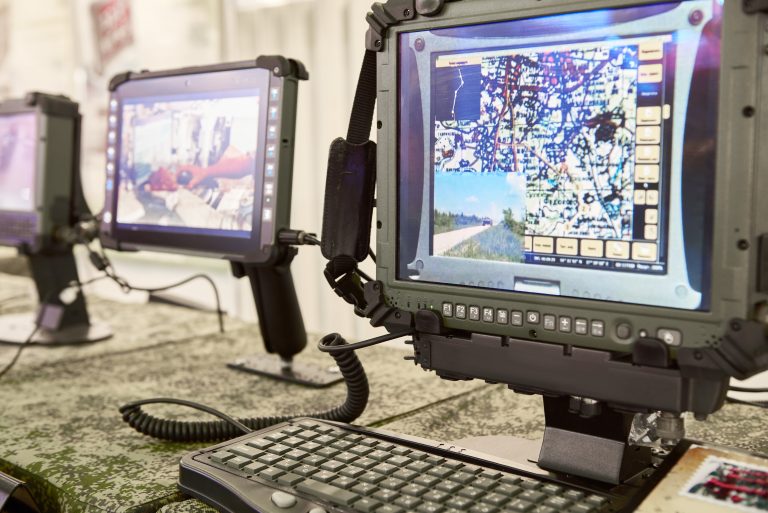
Vehicle displays, ship helms and aircraft cockpits need a sunlight readable outdoor display that also works at night and survives shock and vibration. These programs often specify environmental testing such as MIL-STD-810 and NVIS compatibility for night vision goggles, which E3 addresses with rugged displays and NVIS displays.
Considerations for Choosing Sunlight Readable Monitors
When selecting a sunlight readable monitor, several factors should be considered to ensure optimal performance and suitability for your application:
Brightness Level
Choose a monitor with sufficient brightness to counteract the effects of direct sunlight. Monitors with brightness levels above 1000 nits are generally recommended for outdoor use. Ensuring the appropriate brightness level will prevent the screen from appearing washed out and maintain readability. As a general guide:
- Indoor office monitors: typically about 250–350 nits.
- Bright indoor areas or shaded outdoor locations: roughly 700–1,000 nits.
- Direct sunlight: 1,000 nits and above, with higher levels for screens that face the sun.
Anti-Reflective Coatings
Ensure that the monitor has effective anti-reflective coatings to minimize glare and reflections, enhancing readability in bright conditions. High-quality anti-reflective treatments are crucial for maintaining clear and sharp images, even when the screen is exposed to direct sunlight.
Temperature Range
Consider the operating temperature range of the monitor. For outdoor applications, it is important to choose a display that can function reliably in both extreme heat and cold. Monitors with wide temperature ranges ensure consistent performance and prevent damage from environmental extremes.
Durability and Sealing
Select a monitor that is built to withstand environmental factors such as dust, moisture, and temperature fluctuations. Monitors with robust sealing and durable construction are ideal for outdoor use. Durability features protect the internal components of the monitor, ensuring long-term reliability. For outdoor installations, look for an ingress protection rating such as IP65 or IP67 on the front panel.
Energy Efficiency
Look for monitors with transflective technology or other energy-efficient features to reduce power consumption and extend battery life. Energy-efficient monitors are particularly important for applications where power availability is limited or where extended operation is required without frequent recharging.
How Sunlight Readable Displays Are Changing Outdoor Tech
Outdoor technology has rapidly evolved, and at the forefront of this transformation are sunlight-readable monitors. These innovative displays have revolutionized how digital content is viewed in outdoor settings, making it easier to see screens in bright sunlight. From digital signage to complex monitoring systems, the applications of these monitors are vast and critical for modern outdoor solutions.
What’s Special in Sunlight Readable Monitors?
These displays are engineered to deliver exceptional clarity and visibility, even in direct sunlight. Their unique attributes make them a preferred choice for outdoor applications:
- Smart Brightness Control: These displays adjust their brightness dynamically according to the surrounding light, ensuring a consistent and energy-efficient viewing experience.
- Enhanced Glare Reduction: Equipped with advanced anti-reflective coatings, these screens effectively minimize glare, maintaining clear and readable content regardless of external lighting conditions.
- Durable Design and Optimal Functionality: These displays go beyond clear visuals, incorporating UV protection and sophisticated thermal management to safeguard against environmental elements and maintain optimal performance in direct sunlight.
Elevate Your Display Technology with E3 Displays
E3 Displays is a leading provider of sunlight-readable monitors, offering a range of products designed to perform in bright outdoor environments. Partnering with E3 Displays ensures access to high-quality, reliable display solutions tailored to your specific needs. Our engineering team in Phoenix, AZ can combine optical bonding, anti-reflective film lamination, PCAP touch, EMI protection and wide-temperature components into a custom sunlight readable display.
Custom Solutions
E3 Displays offers custom solutions to meet unique requirements. Whether you need a specialized display for a specific application or advice on selecting the right monitor, our expert team is ready to assist. Custom solutions ensure that the monitors meet the exact specifications and performance criteria needed for specialized applications.
Quality Assurance
All products from E3 Displays are manufactured to the highest standards of quality and safety. Rigorous testing and quality control processes ensure reliable performance in demanding conditions. Quality assurance practices ensure that every monitor delivered meets the stringent requirements for durability and functionality.
Technical Support
E3 Displays provides technical support to help you optimize the use of your sunlight readable monitors. Their knowledgeable team can offer guidance on installation, maintenance, and troubleshooting. Access to expert technical support ensures that any issues are promptly addressed, and the monitors continue to operate at peak performance.
To learn more about E3 Displays’ offerings, visit About Us. You can also browse our sunlight readable displays.