Ambient light directly affects display readability. In industrial and commercial environments, overhead lighting, direct sunlight, and reflective surfaces reduce contrast and create visual distortion. Poor reflection control leads to operator fatigue, input errors, and reduced situational awareness.
Reflection control becomes critical in medical devices, industrial HMIs, transportation systems, and outdoor equipment. Engineers must evaluate surface treatments early in the design phase. Two common solutions are anti-glare film and anti-reflection film. Although the terms are often used interchangeably, their optical functions differ significantly.
Understanding those differences helps technical teams specify the correct surface treatment for TFT displays and integrated touch systems.
People Also Ask (PAAs)
What is the difference between anti-glare and anti-reflective screen films?
Anti-glare film diffuses reflected light using a matte surface to reduce glare, while anti-reflective film uses optical coatings to reduce the amount of light reflected and preserve display clarity.
Which is better for sunlight readability: anti-glare or anti-reflective film?
Anti-reflective film is usually better for sunlight readability because it reduces surface reflectance and maintains display contrast and sharpness in high ambient light.
What Is Anti-Glare Film?
Anti-glare film reduces surface glare by diffusing reflected light. It modifies the top surface with a micro-textured finish. Instead of reflecting light in a single direction, the surface scatters it.
Key characteristics of this surface treatment include:
- Reduces harsh glare from overhead lighting
- Minimizes mirror-like reflections
- Improves readability in bright indoor settings
- Adds surface durability and scratch resistance
However, diffusion slightly reduces optical clarity. Fine text and high-resolution graphics may appear marginally softer. For industrial control panels, this trade-off is often acceptable because glare reduction improves overall usability.
Anti-glare film is commonly applied to TFT displays used in factory automation, kiosks, and commercial equipment operating under controlled lighting conditions.
What Is Anti-Reflective Film?
Anti-reflective film reduces reflection through optical interference rather than diffusion. It uses thin-film coatings engineered to cancel reflected light waves. Instead of scattering light, it allows more light to pass through the display surface.
Key characteristics of this coating include:
- Reduces total surface reflectance
- Preserves display sharpness and contrast
- Enhances image clarity in high ambient light
- Maintains optical transparency
Anti-reflection film improves sunlight readability without softening the image. This makes it suitable for high-brightness TFT displays, outdoor interfaces, and medical monitors where visual precision is critical. Unlike anti-glare treatments, anti-reflective coatings do not introduce haze. The display retains its native clarity.
Anti-Glare vs Anti-Reflective: Technical Comparison
Although both films manage reflection, they operate differently.
Optical Behavior
- Anti-Glare: Diffuses reflected light
- Anti-Reflective: Reduces reflection at the optical interface
Image Clarity
- Anti-Glare: Slight reduction in sharpness due to diffusion
- Anti-Reflective: Maintains sharpness and contrast
Best Environment
- Anti-Glare: Bright indoor lighting
- Anti-Reflective: Outdoor or high ambient light conditions
Surface Appearance
- Anti-Glare: Matte finish
- Anti-Reflective: Clear finish
Selecting between anti-glare and anti-reflective films depends on lighting conditions, required clarity, and application demands.
Can Anti-Glare and Anti-Reflective Be Combined?
In certain applications, anti-glare and anti-reflective treatments can be layered. This approach balances glare diffusion and reflectance reduction.
Combined solutions are often used in:
- Outdoor industrial displays
- Medical imaging interfaces
- High-brightness TFT panels
- Transportation control systems
However, layering must be engineered carefully. Excessive diffusion can negate the clarity advantages of anti-reflective coatings. Optical stack design, adhesive selection, and surface hardness must be evaluated during integration.
How to Choose the Right Film for a TFT Display
Film selection should align with the operational environment and display specifications.
Evaluate these factors:
- Ambient light intensity
- Viewing distance
- Display resolution and pixel density
- Presence of protective cover glass
- Requirement for touch integration
- Mechanical durability standards
For indoor factory environments with overhead lighting, anti-glare film may provide sufficient performance. For outdoor kiosks or mission-critical medical systems, anti-reflective film often delivers superior readability.
High-brightness TFT displays benefit significantly from transparent anti-reflective films, which preserve contrast while reducing surface reflectance.
Common Misconceptions About AG and AR Films
Misunderstandings frequently occur during specification.
- Misconception 1: Anti-glare and anti-reflective are identical. They address reflection differently. One diffuses light; the other reduces reflectance.
- Misconception 2: Matte surfaces always improve sunlight readability. Matte finishes reduce glare but do not necessarily improve contrast under direct sunlight.
- Misconception 3: Reflection control eliminates the need for brightness optimization. Brightness, contrast ratio, and optical bonding remain critical design factors.
Clear differentiation between AG and AR films prevents costly redesign cycles.
The Role of Optical Bonding in Reflection Control
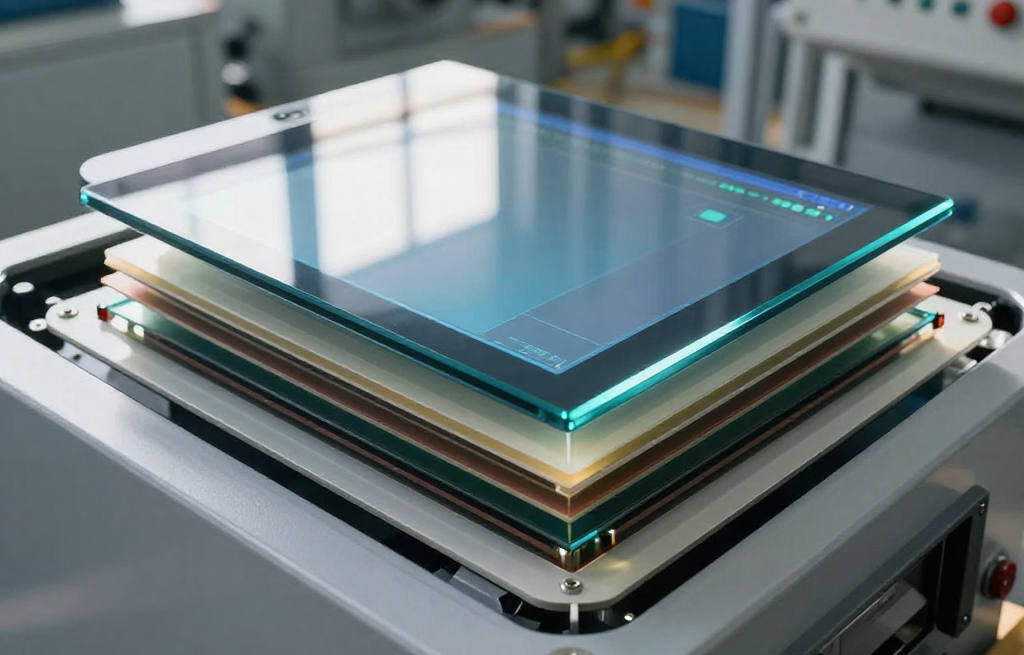
Optical bonding enhances reflection control by eliminating the air gap between the display and cover glass. Removing the air interface reduces internal reflections and improves contrast.
When combined with anti-reflective coatings, optical bonding significantly improves sunlight readability. It also enhances mechanical durability and reduces the risk of condensation.
Engineers designing rugged or outdoor TFT systems often integrate optical bonding into their overall reflection management strategy.
Anti-glare and anti-reflective films serve distinct optical purposes. Anti-glare treatments diffuse reflected light, reducing surface glare. Anti-reflective coatings minimize total reflectance while preserving clarity. Correct specification depends on environmental conditions, display brightness, and performance requirements.
For commercial and industrial display development, surface treatment decisions should be evaluated alongside brightness, bonding, and mechanical integration.
E3 Displays supports OEMs and product designers in selecting and integrating the appropriate optical solutions for demanding applications. Contact E3 Displays to learn more about these touch screen protection films.