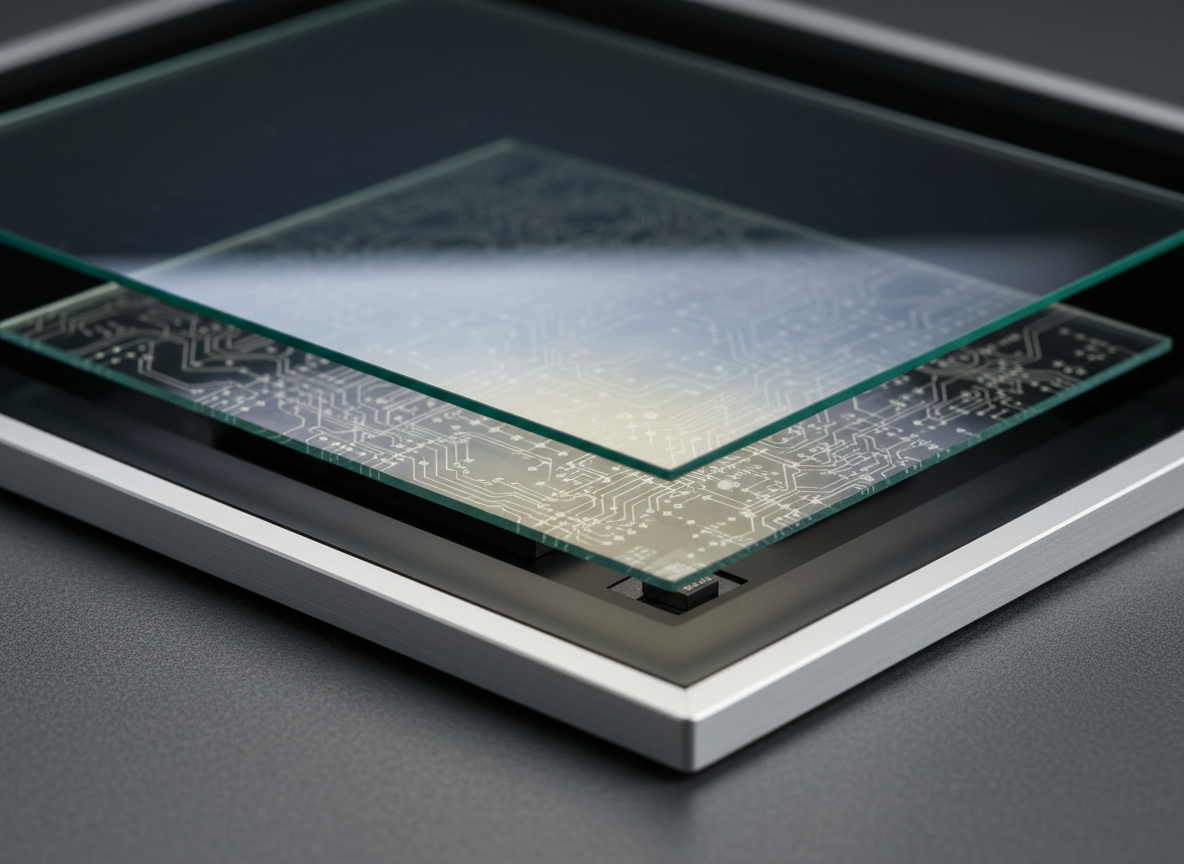
Display selection plays a critical role in how industrial and commercial systems perform over time. For OEMs, engineers, and product designers, choosing between TFT and IPS displays affects readability, reliability, power consumption, and long-term availability. While both technologies fall under the LCD category, they behave differently in real-world applications.
Choosing between an IPS and a TFT display supplier is not always easy. But this decision helps technical teams align display performance with operational requirements rather than assumptions.
What Is a TFT Display?
A TFT display, or thin-film transistor display, is an active-matrix LCD technology. A dedicated transistor controls each pixel, allowing faster response times and improved image stability compared to passive-matrix LCDs.
Standard displays from TFT display suppliers are widely used in industrial HMIs, control panels, instrumentation, and embedded systems. They support a range of resolutions, brightness levels, and sizes. TFT technology offers strong design flexibility and remains a common choice for applications that prioritize performance consistency and cost efficiency.
What Is an IPS Display?
An IPS display, or in-plane switching display, is a subtype of TFT technology. The key difference lies in how liquid crystal molecules align and rotate within the panel. In IPS displays, crystals move parallel to the glass surface rather than perpendicular to it.
This structural change improves viewing angle stability and color consistency. IPS displays maintain image quality across wider viewing angles, making them suitable for systems where multiple operators or off-axis viewing is common.
TFT vs IPS: Core Technical Differences
Although IPS is built on a custom TFT display architecture, several performance characteristics differ.
- Viewing Angles: Standard TFT displays often exhibit color shift or reduced contrast at wider viewing angles. IPS displays provide more stable brightness and color across horizontal and vertical viewing ranges.
- Color Consistency: IPS displays deliver more uniform color reproduction across the screen. Standard TFT panels may vary with viewing position.
- Response Time: Traditional TFT displays often have faster pixel response times. IPS panels may exhibit slightly slower response, depending on the implementation.
- Power Consumption: IPS displays generally consume more power due to their electrode structure and backlight requirements. Standard TFT displays can be more power-efficient in many industrial configurations.
- Cost Considerations: IPS displays typically cost more due to their manufacturing complexity. Standard TFT displays offer broader availability across cost-sensitive applications.
When a Standard TFT Display Makes Sense
A standard TFT display is well-suited for applications where viewing occurs from a fixed or narrow angle.
Common use cases include:
- Industrial control panels with front-facing operators
- Embedded instrumentation and monitoring equipment
- Machinery interfaces with defined mounting positions
- Systems where power efficiency is a priority
TFT displays support long production lifecycles and broad customization options. For many industrial systems, working with TFT display manufacturers provides a balanced combination of performance, availability, and integration flexibility.
Choosing Between TFT and IPS Displays
Selecting between TFT and IPS displays depends on application conditions rather than perceived hierarchy. Both technologies serve distinct roles in industrial and commercial products.
Key decision factors include:
- Viewing angle requirements
- Power and thermal constraints
- Environmental conditions
- Cost targets and lifecycle expectations
- Mechanical and enclosure design
Display selection works best when considered early in the product design process. Matching display behavior to operational reality reduces redesign risk and improves long-term system performance. Connecting with TFT display suppliers early in the design phase supports informed decisions and smoother system integration.
E3 Displays supports the integration of custom TFT LCD displays for industrial and commercial applications. Contact E3 Displays today to work with technical teams to align display technology with real-world requirements.


 February 27, 2026
 February 27, 2026
 February 25, 2026