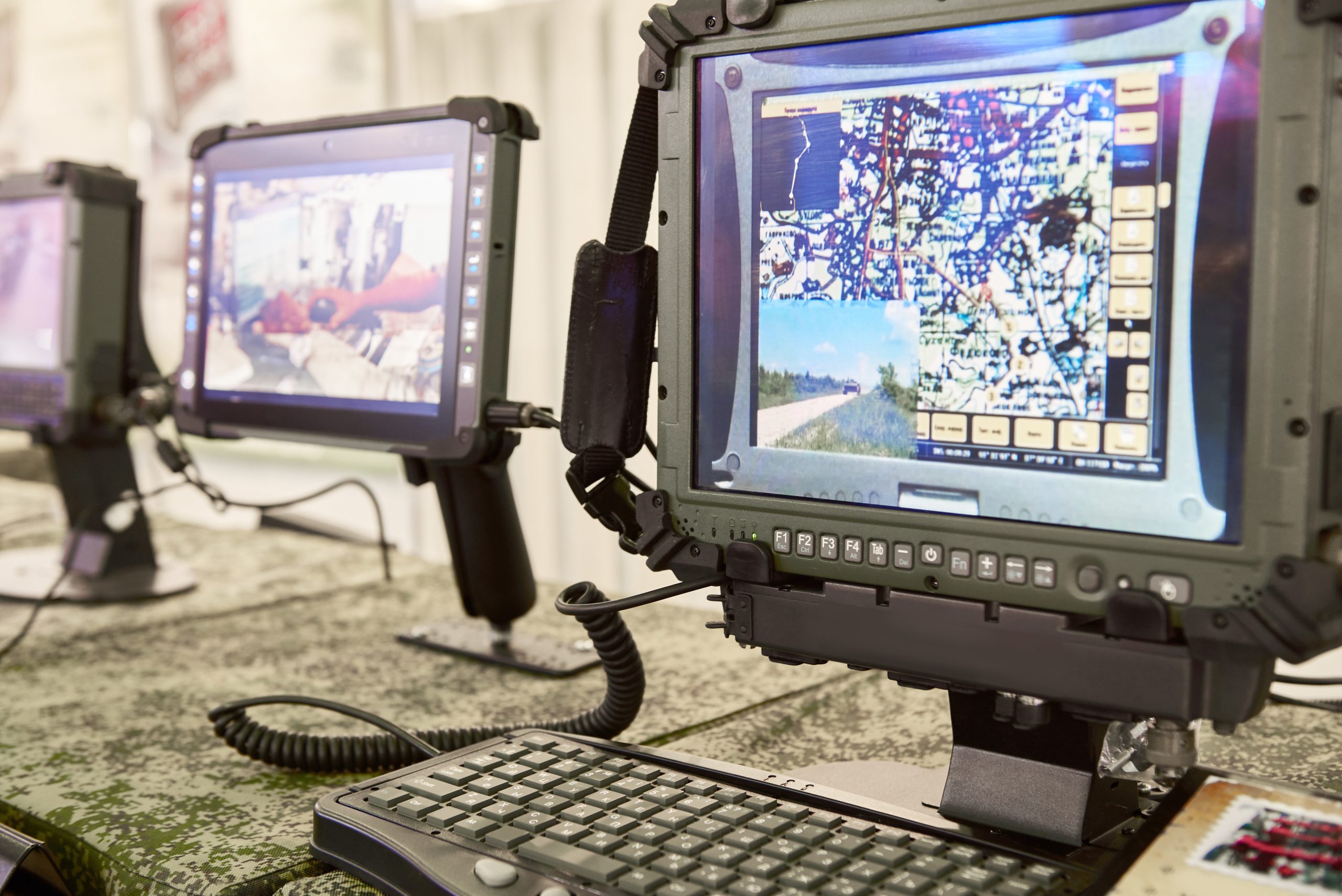
Military displays are screens built to military specifications so soldiers, pilots and crews can read critical data in vehicles, aircraft, ships and command posts. A military grade display typically adds sunlight readability, NVIS night-vision compatibility, glove-ready touch, EMI shielding and testing to standards such as MIL-STD-810 for shock, vibration and temperature.
Military environments are among the most challenging on earth, requiring equipment that can withstand extreme conditions without faltering. This is particularly true for custom military displays, which are essential for providing clear, reliable information in critical situations. E3 Displays has emerged as a key player in this field, offering solutions that exemplify the advancements in display technology tailored for military use.
The Significance of Military Display Systems in Operations
Military LCD display systems are essential in the demanding context of military operations, ensuring durability and reliability under tough conditions. These systems are designed to withstand extreme environments, from scorching heat to freezing cold, maintaining uninterrupted access to crucial operational data. This reliability is vital for navigating through unfamiliar terrains, where accurate and up-to-date information is critical for mission success. Additionally, in situations that require precision, these rugged display systems offer clear and dependable access to important data, facilitating accurate task execution. Their robust construction guarantees that essential information is always accessible, enabling military personnel to adapt quickly and make informed decisions during complex operations.
Where Military Displays Are Used
Military displays appear across every domain, and each platform adds its own requirements:
- Ground vehicles: driver, commander and weapon-station displays that face constant shock and vibration
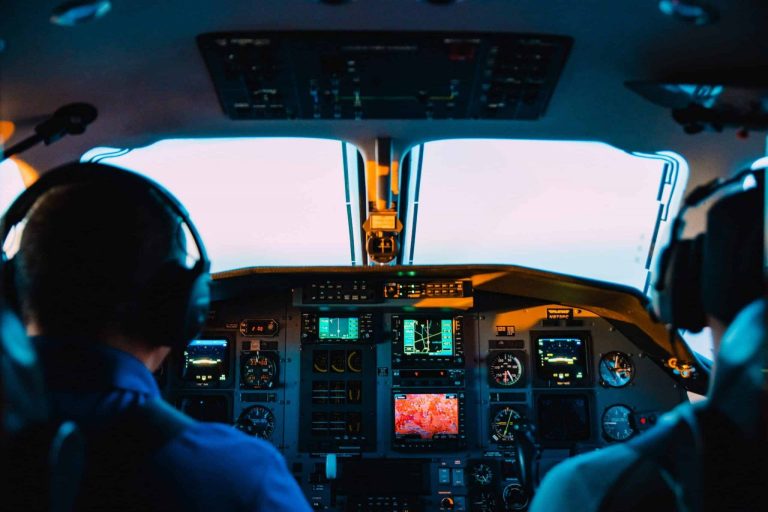
- Aircraft: cockpit and mission displays that must also meet airborne requirements such as DO-160
- Ships: bridge and combat-system consoles exposed to salt fog and humidity
- Command posts: command-and-control workstations and large-format situational displays
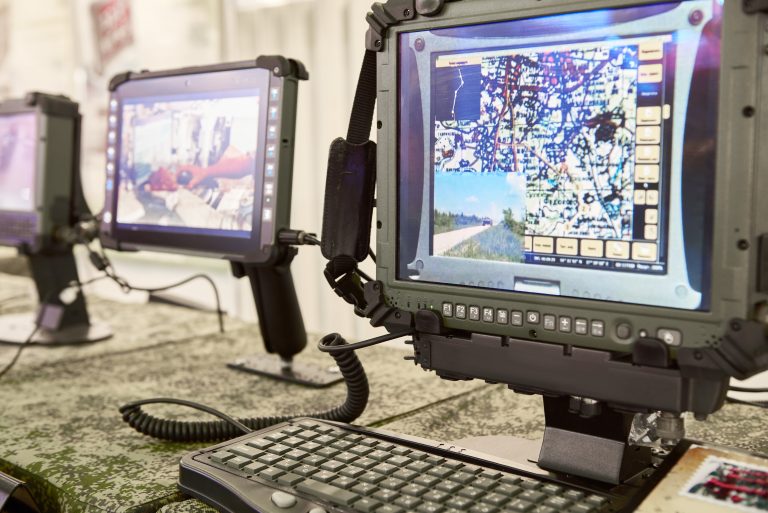
- Dismounted soldiers: handheld and tablet displays used with gloves in sun, rain and darkness
E3 Displays’ Approach to Military-Grade Display Solutions
E3 Displays has distinguished itself by focusing on the specific needs of military applications. Our approach goes beyond standard ruggedization, incorporating features that enhance operational efficiency:
- Enhanced Interactivity: Touch screens that remain responsive under extreme conditions, including heavy glove use, ensure seamless interaction with critical data.
- Visibility Under Any Condition: Adjustments for brightness and anti-glare technologies maintain screen visibility, from the intense light of desert operations to the low-light conditions of night missions.
- Adaptability to Environmental Extremes: Solutions designed to perform in a wide range of temperatures and humidity levels ensure reliability across diverse climates and situations.
- Integration of Night-Vision Technologies: Compliance with military standards for night-vision compatibility (NVIS lighting, defined in MIL-STD-3009) allows for operations in dimly lit environments without compromising security or effectiveness.
- Optical Bonding and EMI Shielding: Optically bonded cover glass improves contrast and shock resistance, while EMI/RFI shielding helps displays work alongside radios and other sensitive electronics.
The Role of Military Display Suppliers in Mission Success
A dependable military display supplier like E3 Displays plays a critical role in the success of military missions. By providing customized, durable, and innovative display solutions, we ensure that military personnel have the information they need, exactly when they need it, enhancing decision-making and operational efficiency.+
What to Look for in a Military Display Supplier
- Custom display design: the ability to match size, resolution, brightness and mounting to the platform
- In-house enhancements: optical bonding, film lamination, NVIS filtering and EMI protection
- Quality control: documented inspection, such as zero pixel inspection, and traceable test results
- Lifecycle support: long-term panel availability and managed revisions for programs that run for years
- Engineering access: a team that supports integration from prototype to production
The Future of Military Operations with Advanced Military Displays
As military technology continues to evolve, the capabilities of rugged military displays will expand, offering even greater support to military operations. Innovations in display technology, driven by suppliers committed to military needs, promise to further enhance the effectiveness and safety of military personnel in the field. Higher-resolution panels, OLED for lower-power handheld devices and larger multi-touch command displays are all becoming more common in defense programs.
Rugged military displays, particularly those provided by specialized suppliers like E3 Displays, are integral to the modern military apparatus. Their durability, adaptability, and advanced features ensure that these displays not only meet the current requirements of military operations but are also poised to adapt to future challenges, solidifying their role as a cornerstone of operational efficiency.
For a broader look at rugged display design beyond defense, including IP ratings for marine and industrial equipment, read our guide to rugged displays for mission-critical environments. To discuss a program, explore E3’s military displays, NVIS displays and avionics displays, or contact our engineering team in Phoenix, AZ.