OLED technology continues to gain attention across industrial and commercial product design. Despite growing adoption, several misconceptions still influence how OEMs and engineers evaluate its suitability. These misunderstandings often stem from early consumer-focused implementations rather than current industrial-grade capabilities.
Clarifying these misconceptions helps technical teams assess whether OLED displays meet performance requirements, lifecycle expectations, and operating conditions. Understanding both limitations and advantages supports better display decisions during product development.
People Also Ask (PAAs):
Are OLED displays suitable for industrial applications?
OLED displays are well-suited to many industrial applications when brightness, duty cycle, and interface design align with OLED performance characteristics.
Do OLED displays last long enough for commercial products?
OLED lifespan depends on usage conditions. With proper design considerations, OLED displays support long-term commercial deployment.
Misconception #1: Burn-In Is Inevitable
Burn-in remains one of the most common objections to OLED display technology. Early OLED implementations in consumer electronics exhibited image retention when static, high-contrast content was displayed continuously at high brightness.
Modern OLED displays used in commercial and industrial systems address this issue through improved materials, pixel management, and controller logic. Industrial OLED applications typically involve dynamic content, controlled brightness levels, and operational duty cycles that differ significantly from consumer usage patterns.
When designers account for display use conditions during system design, burn-in risk becomes manageable rather than inevitable.
Misconception #2: OLED Displays Are Only for Consumer Electronics
OLED displays are often associated with smartphones and consumer screens. This perception overlooks their increasing role in industrial, medical, and commercial equipment.
Industrial OLED displays now appear in:
- Portable medical instruments
- Industrial handheld controllers
- Compact HMIs
- Test and measurement equipment
- Wearable industrial devices
OLED’s thin profile, high contrast, and wide viewing angles support applications where space constraints and visual clarity matter.
Misconception #3: OLED Displays Have Short Lifespans
OLED lifespan concerns often focus on organic material degradation. While OLED pixels do age over time, their lifespan varies with brightness level, operating hours, and content type.
Industrial OLED implementations typically operate at lower brightness than consumer displays. Many industrial interfaces use darker backgrounds, segmented graphics, and controlled duty cycles. These factors significantly extend usable display life.
Modern OLED panels now support operational lifespans suitable for long-life industrial products when system design aligns with display characteristics.
Misconception #4: OLED Is Always More Power-Hungry
OLED power usage differs fundamentally from LCD technology. OLED pixels emit light individually, eliminating the need for a backlight. Power consumption varies based on the displayed content rather than remaining constant.
Industrial systems that prioritize efficiency, portability, or battery-powered operation can benefit from this characteristic.
Power requirements should be evaluated based on actual interface design, not general assumptions about display technology.
Misconception #5: OLED Displays Are Too Fragile
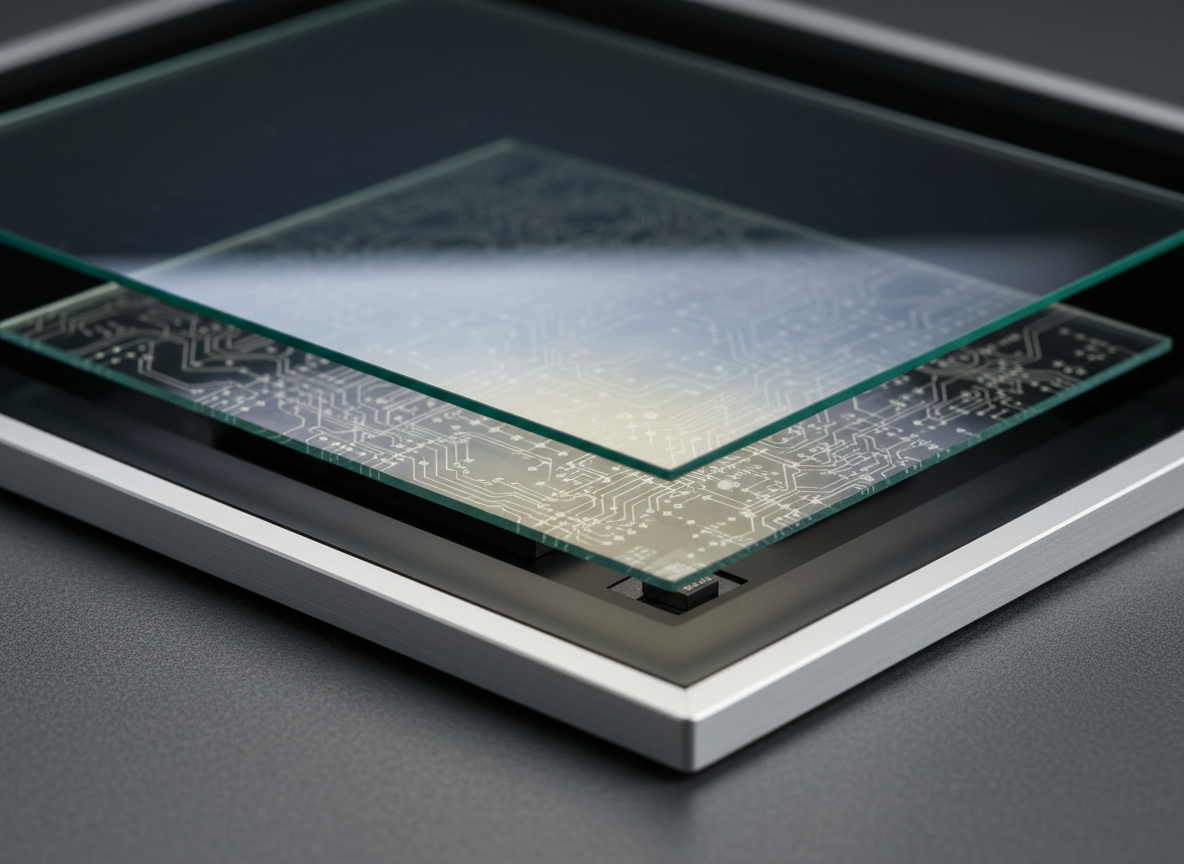
OLED displays are frequently perceived as fragile due to their thin construction. In practice, durability depends on how the display integrates into the overall system.
Industrial OLED modules can incorporate:
- Protective cover glass
- Reinforced mounting solutions
- Optical bonding for improved mechanical stability
When properly integrated, OLED displays withstand vibration, handling, and routine operational stress common in commercial and industrial environments.
The Real Advantages of OLED Displays
Custom OLED displays offer several advantages that support specific industrial use cases.
Key advantages include:
- High contrast ratios for clear visual separation
- Wide viewing angles without colour shift
- Fast response times for dynamic interfaces
- Thin and lightweight form factors
- Flexible display shapes and sizes
These characteristics support compact device design, improved readability, and modern interface requirements. OLED technology enables designs that would be difficult to achieve with traditional LCD architectures.
When OLED Makes Sense — and When It Doesn’t
OLED displays now address many early misconceptions through improvements in materials and controllers. When evaluated objectively, OLED offers clear advantages for many industrial and commercial applications. Successful adoption depends on understanding real performance characteristics rather than outdated assumptions.
OLED displays work best when product requirements align with their strengths. They make sense for applications that value visual clarity, compact design, and controlled operating conditions.
OLED may not be ideal for:
- Continuous high-brightness static content
- Extremely long unattended display cycles
- Applications requiring uniform white backgrounds at maximum brightness
Understanding these trade-offs allows engineering teams to choose OLED intentionally rather than reactively.
Selecting the right OLED display involves balancing lifecycle expectations, power requirements, mechanical integration, and interface design. For projects where OLED aligns with these factors, the technology provides meaningful design and performance benefits.
E3 Displays supports OEMs in evaluating when OLED displays align with long-term performance and design goals. Contact E3 Displays to ensure seamless OLED integration for industrial and commercial products.


 February 27, 2026
 February 25, 2026