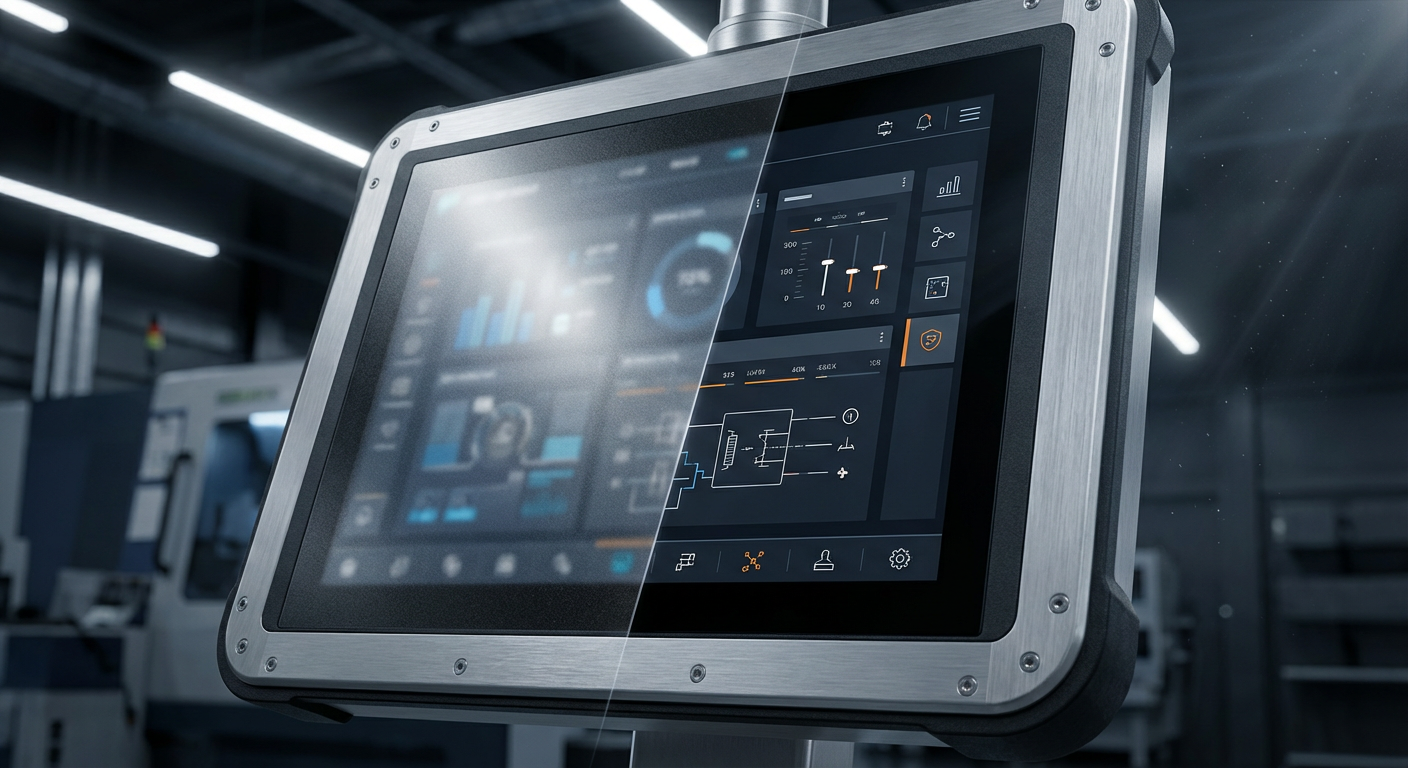
Modern industrial equipment depends on stable, readable, and long-lifecycle visual interfaces. From factory automation systems to medical instrumentation, display selection directly affects usability, reliability, and product lifespan. Among flat-panel technologies, thin-film transistor liquid crystal displays remain widely specified due to scalability, cost balance, and design flexibility.
Understanding the variants of TFT LCD display technology helps engineering teams in many ways. It helps align optical performance, power consumption, and environmental durability with application requirements.
People Also Ask (PAAs)
What are the main types of TFT LCD panels?
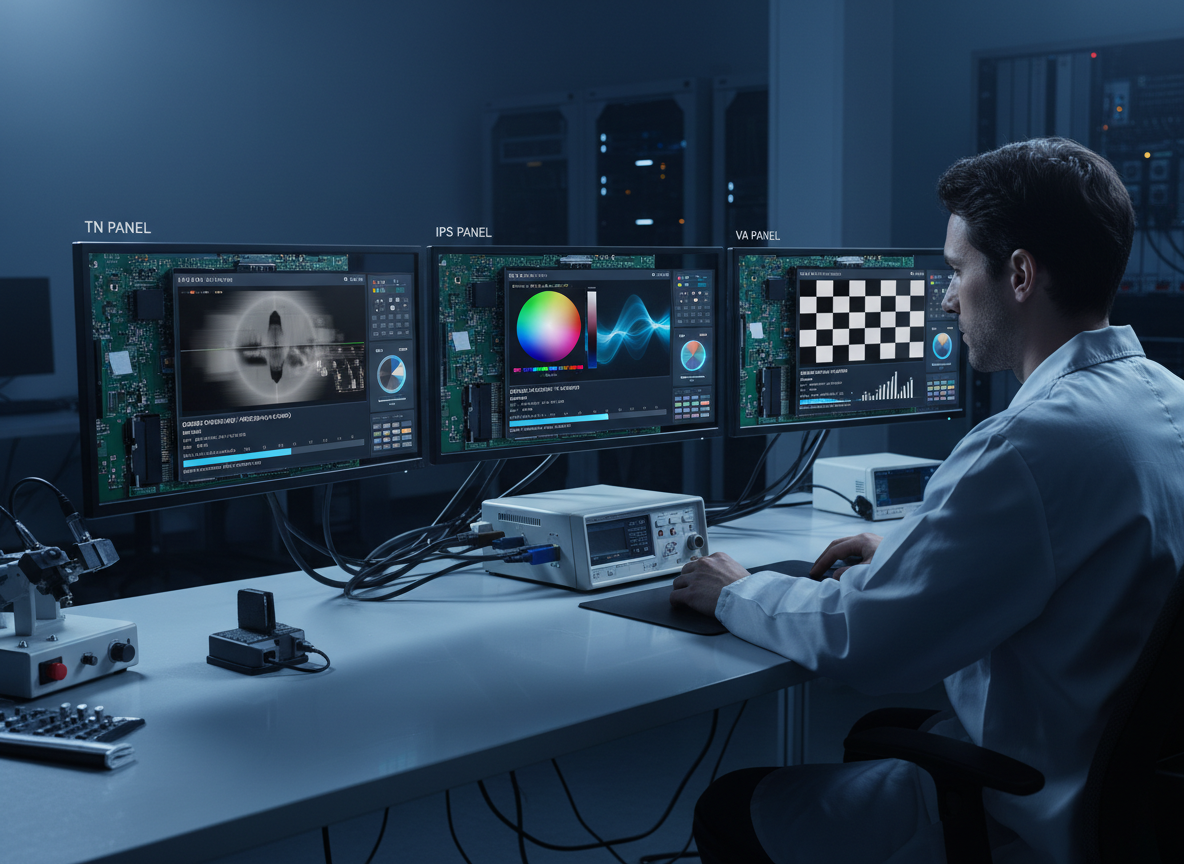
The main variants include twisted nematic (TN), in-plane switching (IPS), and vertical alignment (VA). Each differs in viewing angle, contrast ratio, response time, and color stability.
How do IPS and TN TFT LCD panels differ in industrial applications?
IPS panels provide wider viewing angles and better color accuracy, while TN panels offer faster response time and lower cost. Selection depends on optical requirements and integration constraints.
What Is TFT LCD Technology?
A TFT LCD is a form of active-matrix liquid crystal display. Each pixel is controlled by its own thin-film transistor. This structure enables precise control over brightness, contrast, and refresh rate.
Unlike passive matrix displays, tft technology supports:
- Faster response times
- Higher resolution
- Improved color accuracy
- Stable image rendering under motion
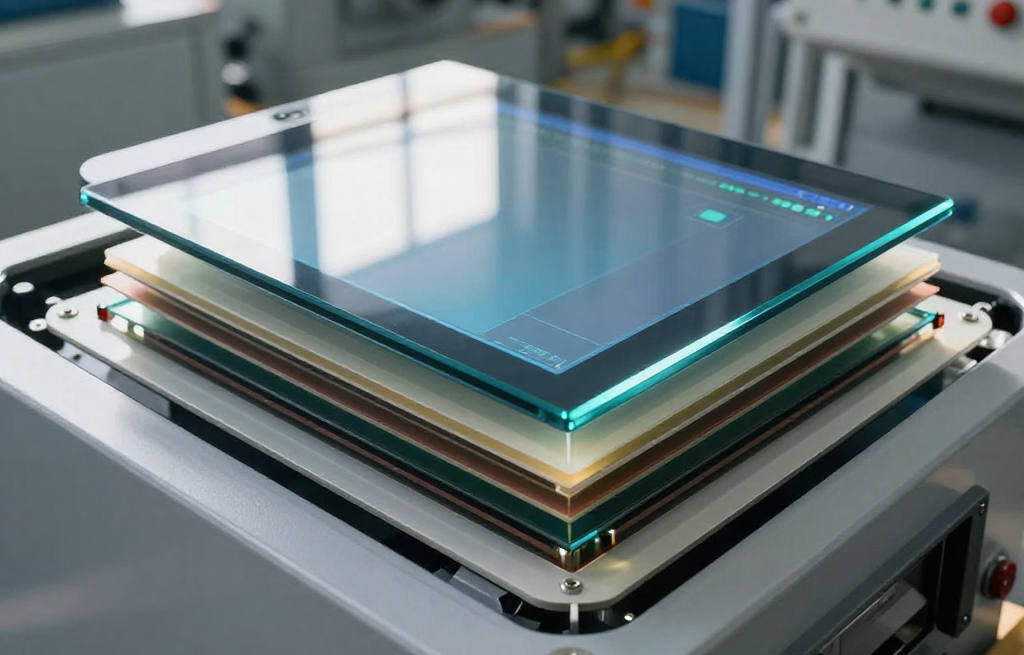
The display stack typically includes:
- Backlight system
- Liquid crystal layer
- Color filters
- Thin-film transistor array
- Polarizers and protective glass
The thin-film transistor layer regulates light transmission at each pixel. This control mechanism makes TFT LCD technology suitable for industrial human-machine interfaces, transportation systems, and embedded device panels.
Why TFT Panel Variants Exist
Not all industrial applications demand the same optical or electrical characteristics. A medical diagnostic device differs from an outdoor construction interface. Multiple TFT panel variants were developed to address:
- Viewing angle requirements
- Power consumption limits
- Brightness and sunlight readability
- Response time demands
- Mechanical thickness constraints
- Cost and lifecycle expectations
Panel architecture, electrode alignment, and liquid crystal behavior vary across designs. These variations directly influence contrast, uniformity, and color stability. Selecting the correct variant reduces redesign risk and improves field performance.
Core TFT LCD Panel Variants
Several panel technologies fall under the umbrella of TFT LCD display technology. Each variant offers distinct performance characteristics.
Twisted Nematic (TN)
Twisted nematic panels are among the earliest and most widely adopted TFT variants.
Key characteristics:
- Fast response time
- Lower manufacturing cost
- Moderate color reproduction
- Narrower viewing angles
TN panels are often selected for cost-sensitive industrial controls or applications that do not require extreme viewing angles.
In-Plane Switching (IPS)
In-plane switching panels improve viewing angle performance and color consistency. The liquid crystal molecules rotate parallel to the panel surface rather than twisting vertically.
Advantages include:
- Wide viewing angles
- Stable color reproduction
- Improved contrast stability
- Better image uniformity
IPS panels are commonly specified for medical displays, instrumentation, and equipment where color accuracy and off-axis readability matter.
Vertical Alignment (VA)
Vertical alignment panels position liquid crystal molecules perpendicular to the substrate when inactive. When voltage is applied, the crystals tilt to allow light transmission.
Performance characteristics:
- High contrast ratio
- Deep black levels
- Moderate viewing angles
- Balanced cost structure
VA technology supports applications where contrast performance is critical, such as monitoring systems and analytical instruments.
Advanced Variants (AHVA, PLS, and Related Technologies)
TFT display manufacturers have developed refinements to IPS and VA architectures. These include technologies such as advanced hyper-viewing angle (AHVA) and plane-to-line switching (PLS).
These refined variants typically deliver:
- Enhanced brightness efficiency
- Improved uniformity
- Reduced power draw
- Better optical stability under temperature variation
Industrial equipment often benefits from these enhancements when operating in controlled yet demanding environments.
Comparing TFT Variants Side-by-Side
A simplified comparison highlights how panel selection affects system behavior.
|
Feature
|
TN
|
IPS
|
VA
|
|
Viewing angle
|
Narrow
|
Wide
|
Moderate
|
|
Contrast ratio
|
Moderate
|
Good
|
High
|
|
Response time
|
Fast
|
Moderate
|
Moderate
|
|
Color accuracy
|
Standard
|
High
|
Good
|
|
Cost
|
Lower
|
Higher
|
Mid-range
|
Key observations:
- TN prioritizes speed and cost efficiency.
- IPS prioritizes viewing angle and color stability.
- VA prioritizes contrast performance.
No variant qualifies as universally superior. Performance depends on operating conditions and design priorities.
Choosing the Right TFT Variant for Your Application
Industrial display selection requires structured evaluation rather than preference-based decisions.
1. Define Optical Priorities
Critical optical questions include:
- Is a wide viewing angle required?
- Does color accuracy affect functionality?
- Is high contrast necessary for low-light environments?
Applications such as laboratory instruments and control rooms often benefit from IPS panels. High-contrast monitoring applications may align with VA panels. Compact embedded systems may tolerate TN limitations.
2. Evaluate Environmental Conditions
Temperature range, vibration exposure, and ambient lighting influence TFT LCD performance.
Consider:
- Operating temperature tolerance
- Sunlight readability requirements
- Backlight brightness levels
- Long-term optical stability
Higher brightness backlight systems and optical bonding techniques may be paired with selected panel variants to improve visibility.
3. Assess Power and Lifecycle Requirements
Long-lifecycle industrial equipment must balance power draw and durability.
Key factors:
- Backlight longevity
- Controller compatibility
- Firmware flexibility
- Supply chain continuity
Engineering teams often prioritize panel variants with established manufacturing stability to reduce long-term risk.
4. Consider Integration Constraints
Mechanical and electrical integration shapes panel selection.
Important considerations:
- Interface compatibility (RGB, LVDS, MIPI)
- Physical thickness and mounting
- Cover glass compatibility
- Touch panel integration
Early collaboration between display engineers and product designers reduces integration friction.
Emerging Developments in TFT LCD Technology
Breaking down the variants of TFT LCD technology clarifies how architectural differences influence real-world performance. Each panel architecture serves distinct engineering objectives. Viewing angle, contrast ratio, response time, power constraints, and environmental exposure must guide panel selection.
Although alternative display technologies continue to evolve, this architecture remains relevant due to ongoing refinement.
Recent advancements include:
- Higher brightness backlight systems for outdoor visibility
- Improved low-power driver ICs
- Enhanced wide-temperature liquid crystal materials
- Slimmer module construction
- Improved pixel density at smaller form factors
These improvements extend the usability of TFT LCDs in industrial and commercial applications that demand consistent image performance and durability.
TFT display suppliers and manufacturers continue to optimize panel efficiency and uniformity while maintaining compatibility with existing integration standards. For projects requiring tailored display integration, contact E3 Displays for custom TFT LCD solutions aligned with commercial and industrial system requirements.
 March 16, 2026