...
Home
About E3 Displays ▾
All Products ▾
Solutions ▾
Industries We Serve ▾
Resources ▾
Contact Us ▾
🎯 Build Your Display Contact Us
FILM LAMINATION

Transparent Anti-Reflective Film & Touch Screen Protection Film

Film Lamination
Anti-reflective film is a thin, transparent optical film laminated to the front of an LCD, OLED or touch screen to cut surface reflections. Its optical coating, typically a multilayer stack, cancels reflected light through destructive interference, so more light from the display reaches the viewer. The result is higher contrast, truer color and better readability under bright ambient light.
E3 Displays Film Lamination Examples 01

Anti Glare / Anti Reflective / Privacy Protective Film for Displays

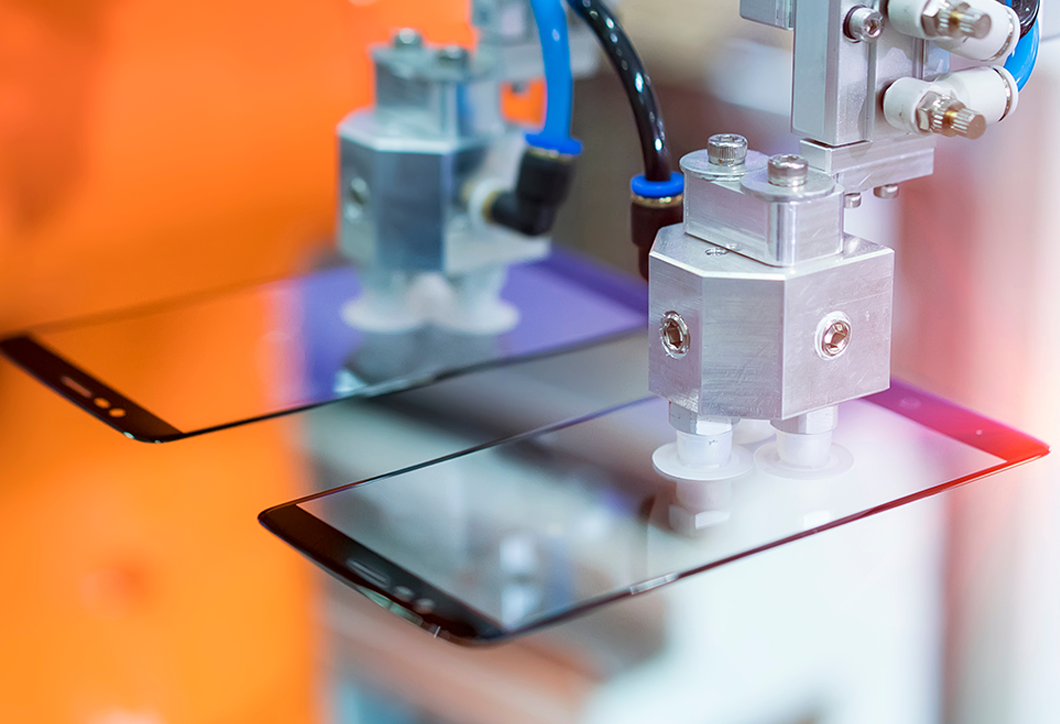
Film laminations provide a wide range of physical and optical enhancements, from increasing safety and strength, to reducing glare and providing privacy. With an extremely diverse and versatile selection of available films, E3 Displays is able to meet a wide range of performance requirements and maintain touch sensitivity. E3 Displays has laminated film enhancements on products from 2.7″ to more than 100”. With a wide range of partnerships with top film suppliers, we can help select the right films to meet your product requirements. Whether you need a clear anti reflective film for a handheld device or protective film for large format touch screen displays, our Phoenix, AZ engineering team matches the film to your display technology, touch sensor and operating environment.

Common Applications

Film 1
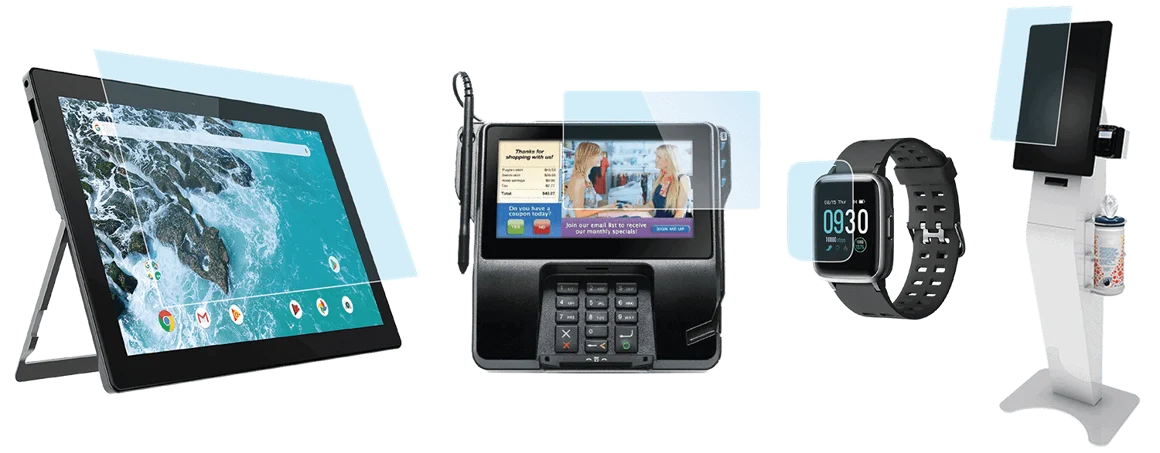
Consumer Handheld / Wearable Devices
Film 2
Point of Sale Terminals
Film3
Medical Devices

Types of Film Lamination

These touch screen protection films are laminated to the front surface of the LCD panel either under or directly in the frame. They make the display brighter and have a higher level of contrast by reducing the surface reflections, softening direct light, and eliminating display distortion from touch.
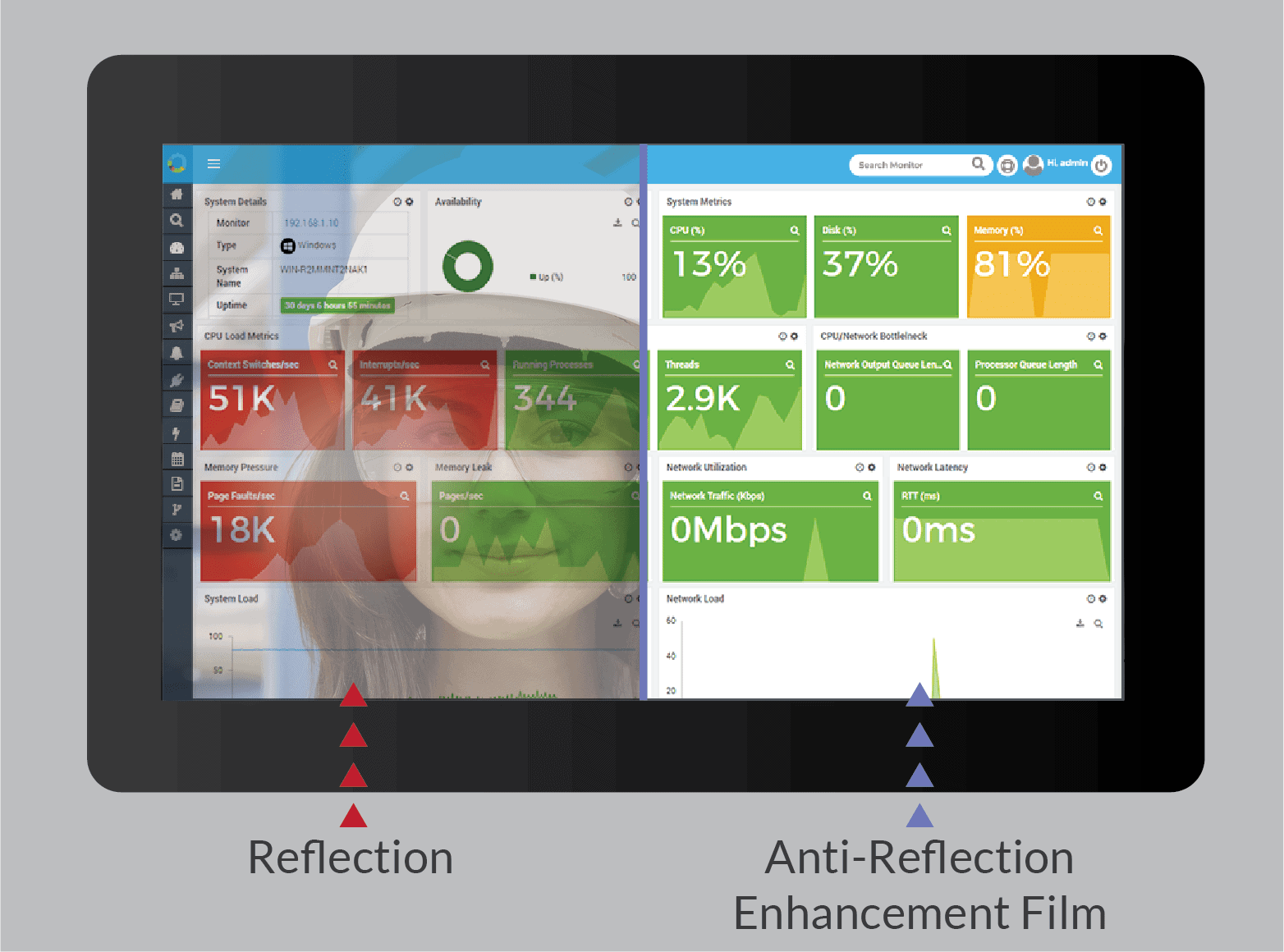
E3 Displays Film Enhancements Examples 02
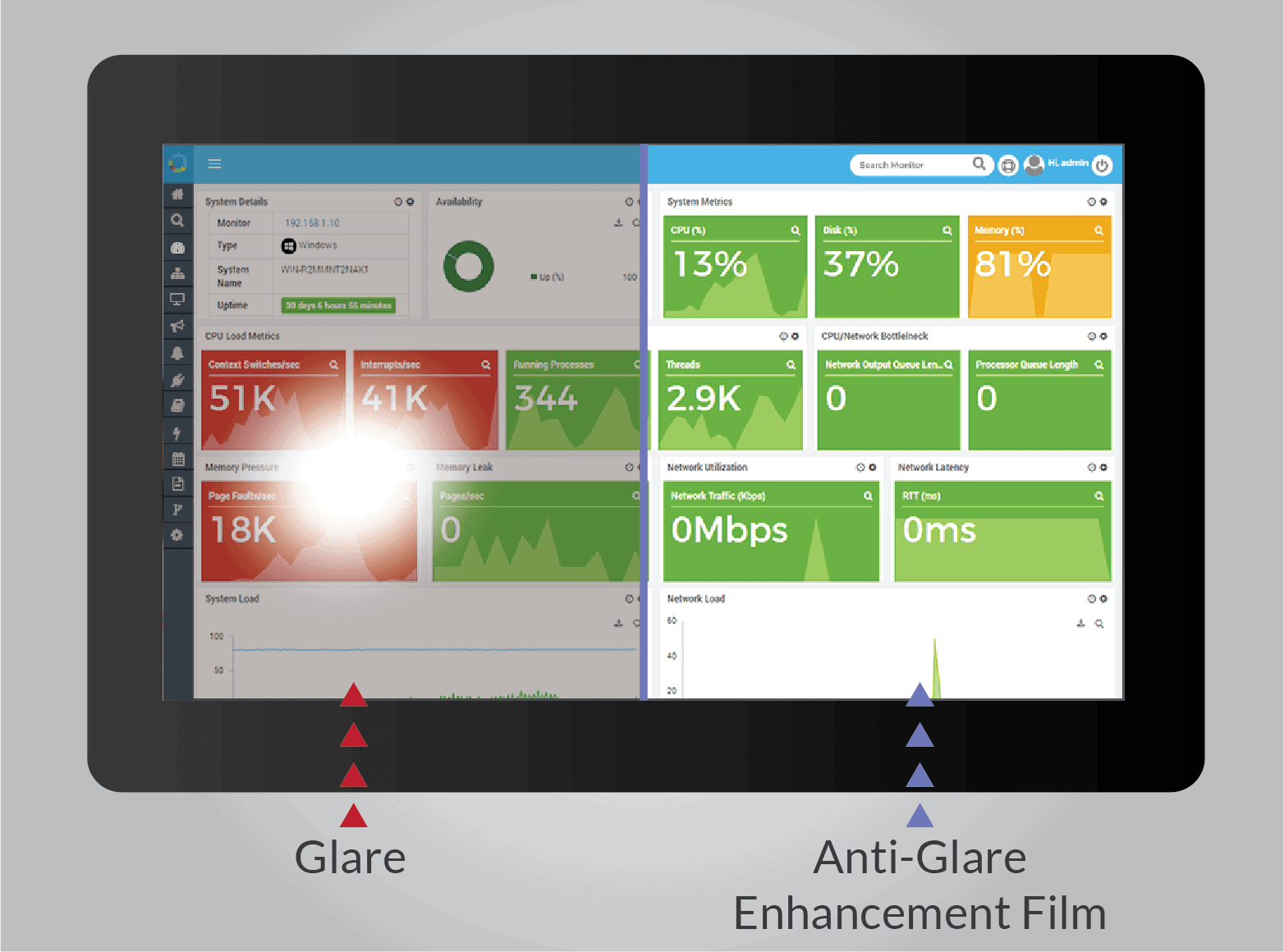
Anti-Glare Film

As the light reflects off the surface of your display screen, it is scattered at different angles, which reduces the clarity of the image. E3 Displays provides Anti-Glare solutions that ensure the consumer will not see the bright glare of any reflected light source. An anti glare touch screen film uses a fine matte texture to diffuse reflections, which makes it a practical choice for public kiosks and POS terminals.

E3 Displays Film Enhancements Examples 03
Anti-Reflective Film

E3 Displays delivers transparent Anti-Reflection film solutions that make sure the consumer will not see their own reflection. Instead, they will see a brighter and more vivid display. Unlike a matte anti-glare surface, transparent anti-reflective film keeps the image sharp because it reduces reflected light instead of scattering it. This low reflection film is a strong fit for high-resolution TFT LCD and OLED displays, medical monitors and sunlight-readable displays where fine detail and color accuracy matter.

E3 Displays Film Enhancements Examples 04
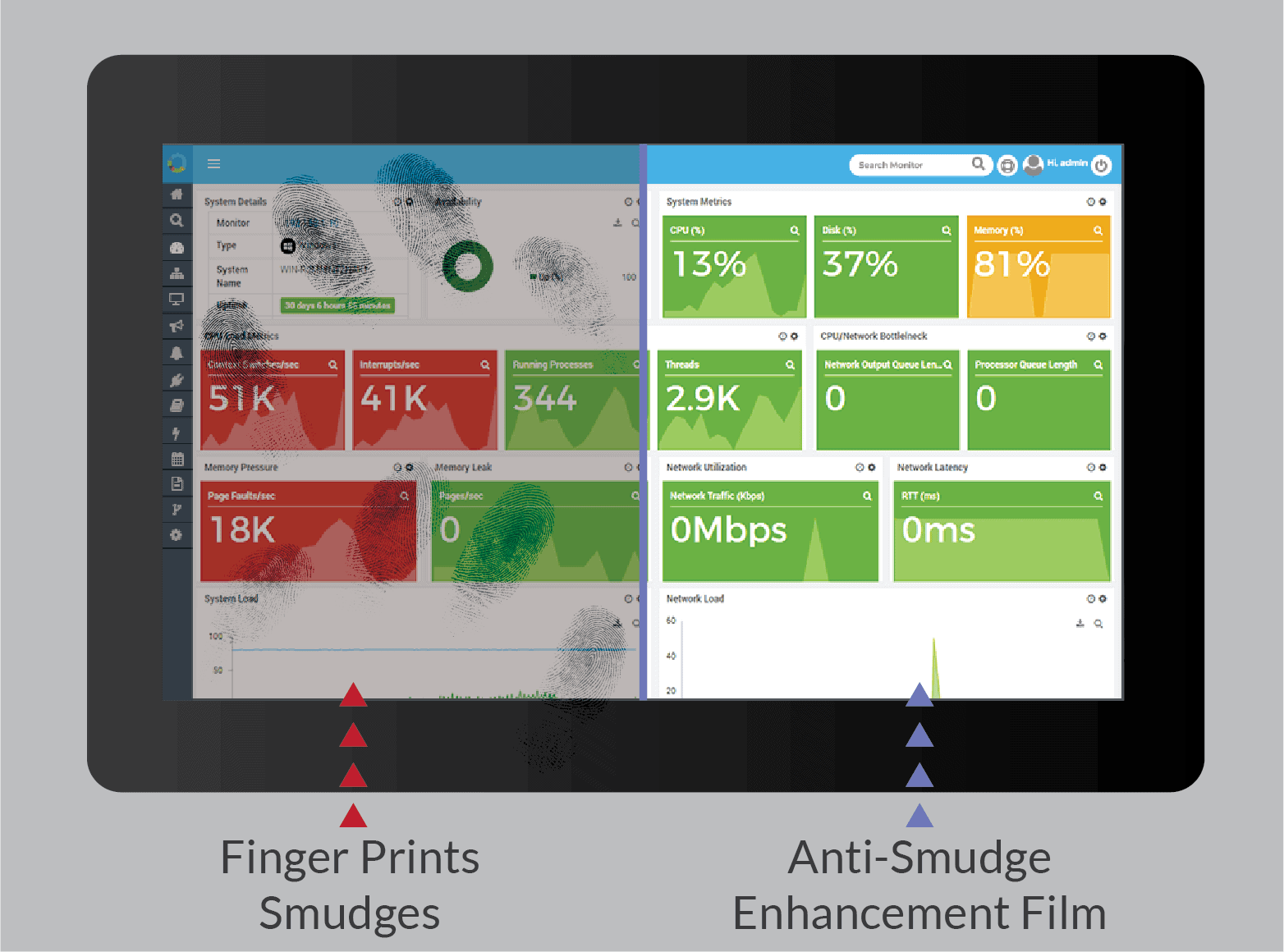
Anti-Fingerprint

AF/AS reduces the ability of the cover lens to retain oils from your finger. Thus providing you with a more crystal clear display without all of the fingerprints and smudge marks.

Privacy

This is designed so that only the user can see the screen display. Any angle that is beyond 30° right or left will be blacked out. This film is laminated to the front of the LCD or OLED screen and ensures that your information is kept confidential.

Conductive (EMI/RFI Reduction)

Will reduce electromagnetic or radio interference by controlling the amount of energy that flows through the display and redirecting it to the appropriate place. EMI/RFI reduction is important in creating a reliable, disruption free, and safe display that will be there when you need it most. Learn more about transparent conductive layers on our EMI shielding film page.

Specialty

Viewing cone enhancements Brightness enhancement Neutral Density Films Color Selective Films Heaters

Anti-Reflective Film vs. Anti-Glare Film: Which Fits Your Display?

Both films reduce glare, but they work differently. Use this quick guide, or read our full anti-glare vs anti-reflective comparison for more detail:
  • Anti-reflective film: cancels reflections with optical interference layers, keeps a clear, glossy image and suits high-resolution, color-critical and sunlight-readable displays.
  • Anti-glare film: diffuses reflections with a matte surface, hides fingerprints well and suits public, high-touch screens where slight image softening is acceptable.
  • Combined AG/AR film: pairs a light matte texture with anti-reflective layers for outdoor screens that face both direct sun and heavy touch use.
For a deeper look at reduced glare, contrast and touch performance, see our article on the advantages of anti-reflection film.

Crystal Clear Displays With Minimized Glare and Reflective Interference

Benefits of Film Lamination

Touch Capabilities

Many touch screen protection films can negatively impact the touch features of your display because they’re too thick, can reduce touch sensitivity, and are not customized for your display. E3’s film lamination is completely custom and designed with the user in mind so you do not have to sacrifice display quality. We select film thickness and adhesives to suit the touch sensor, whether PCAP or resistive, so touch response is preserved.

Anti-Glare/Anti-Reflective

If you have an existing display with glare or reflection issues there is no need to create an entirely new display. E3 Displays can solve your glare and reflection issues on almost any existing display. Anti reflective screen film can also be combined with optical bonding, which removes the air gap behind the cover glass and reduces internal reflections for even better sunlight readability.

Large Format Lamination

Just because you have a large format display does not mean it cannot benefit from film lamination. E3 can laminate displays up to 100″.

Withstand the Elements

You need a display that can hold up in all kinds of environmental elements. E3 strengthens displays with film lamination that can be used with gloves, wet hands, rain, mid-summer sun, snow and much more.

Anti Reflective

How to Specify Anti-Reflective Film for Your Display

  • Review the display: consider panel type (TFT LCD, IPS or OLED), size, brightness in nits, touch technology and the lighting where it will be used
  • Select the film stack: choose anti-reflective, anti-glare, anti-fingerprint, privacy, conductive or specialty films; E3 can help select them through its film supplier partners.
  • Laminate and integrate: the film is laminated to the display or cover lens under or directly in the frame, and can be paired with optical bonding.
  • Verify the result: confirm clarity, touch response and cosmetic quality on samples before moving to production.

Our Experienced Team is Ready to Help

Our E3 Displays team has expertise in every type of display technology, whether big or small. We will help you choose or design the display that best fits your needs, while always keeping quality and budget in mind. Here at E3 Displays, we specialize in custom displays use our product selection guide today to get started on your project today!

FAQ
Frequently Asked Questions

What is anti-reflective film used for?

Anti-reflective film is used to cut surface reflections on LCD, OLED and touch screen displays so the image stays readable in bright light. It is common on medical monitors, point of sale terminals, handheld devices, rugged industrial and military displays, and any screen used near windows, overhead lighting or direct sunlight.

Is transparent anti-reflective film the same as anti-glare film?

No. Transparent anti-reflective film uses thin optical layers to cancel reflected light, so the screen stays clear and sharp. Anti-glare film uses a matte surface that scatters reflections, which hides glare but slightly softens the image. Some applications combine both in a single AG/AR film to balance clarity and glare control.

Does anti-reflective film affect touch screen sensitivity?

A properly specified anti-reflective film should not noticeably affect touch sensitivity. Thick, generic protective films can reduce PCAP responsiveness, which is why E3 matches film thickness and adhesive to the touch sensor. Custom lamination keeps multi-touch, gloved and wet-hand operation working while the film reduces reflections.

Can you add anti-reflective film to an existing display?

Yes. In most cases anti-reflective film can be laminated to an existing display or cover lens without redesigning the whole display. E3 Displays can solve glare and reflection issues on almost any existing display, from small handheld screens to large-format displays of about 100 inches, depending on construction.

What sizes of displays can E3 laminate with protective film?

E3 Displays has laminated film enhancements on products from 2.7 inches to more than 100 inches. That range covers wearables and handheld devices, point of sale terminals, medical equipment and large-format touchscreen displays. Contact our engineering team with your display model and environment to confirm the right film and lamination method.

Does anti-reflective film make a screen readable in sunlight?

Anti-reflective film improves sunlight readability by reducing the reflected light that washes out contrast. For full sunlight readability it is usually combined with a high-brightness backlight and optical bonding, which removes internal air-gap reflections. Together, these steps keep the displayed image visible outdoors without simply raising brightness and power draw.

    Which of the following best describes you?

    Please describe your current project situation

    What is most important for you?

    Select all that apply

    You're all set!

    Tell us about yourself and we'll reach out with tailored solution options.