Electronic systems have become increasingly interconnected, data-driven, and compact. As device designs shrink and processing speeds rise, sensitivity to electromagnetic interference (EMI) has grown dramatically. Displays now sit at the center of medical devices, industrial automation equipment, avionics systems, and defense technology—making EMI protection more important than ever. Without proper shielding, even a high-performance interface can experience signal disruption, touch malfunctions, or visual distortion. This is why EMI shielding has become essential for engineering reliable custom display solutions.
Selecting the right shielding material requires more than checking a specification sheet. It involves understanding environmental demands, regulatory requirements, mechanical design, optical clarity needs, and system-level behavior. The ideal material must block interference while preserving brightness, contrast, touchscreen responsiveness, and durability. This balance is what makes EMI protection both a technical necessity and a strategic design decision.
Understanding EMI and Its Effect on Displays
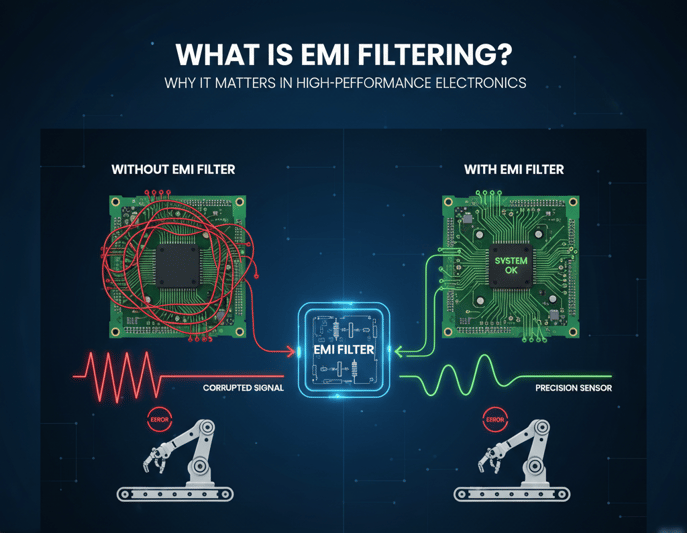
Electromagnetic interference refers to unwanted electrical noise that disrupts electronic components. EMI can originate from motors, radios, antennas, medical machines, power supplies, wireless communication, and even the display itself. Affected displays may show flickering, distorted graphics, inaccurate touch responses, or full operational failure.
Displays are uniquely vulnerable because they contain:
- Thin conductive layers sensitive to electromagnetic fields
- High-frequency timing controllers
- Backlight drivers that generate electrical noise
- Touch sensors that depend on precise capacitance or resistance
- Communication interfaces with low noise tolerance
As system architectures become more densely packed, EMI becomes harder to control—making shielding a critical part of display design.
The Role of EMI Shielding in Custom Displays
EMI shielding creates a protective barrier that prevents interference from entering or exiting the display. In custom display engineering, shielding supports:
- Stable touch performance
- Accurate sensor readings
- Clear visual output without distortion
- Compatibility with nearby electronics
- Compliance with global safety and emissions standards
For medical, defense, and industrial sectors, EMI protection goes beyond performance—it supports safety and operational reliability.
Key Types of EMI Shielding Materials
There is no single shielding solution that fits all applications. Engineers select materials based on transparency needs, shielding effectiveness, durability, environmental exposure, and mechanical constraints. Standard material types include:
- EMI shielding film
- EMI shielding mesh
- Metal coatings
- Conductive adhesives
- Conductive foams and gaskets
- Transparent conductive oxides
Each type varies in effectiveness, cost, transparency, and environmental stability.
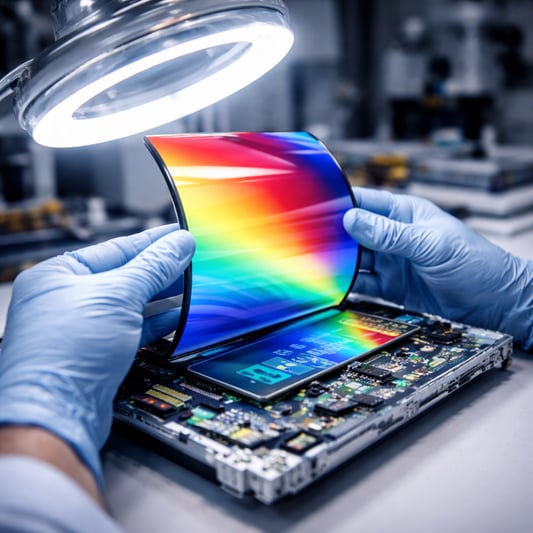
EMI Shielding Film: Lightweight and Transparent Protection
An EMI shielding film is a thin, conductive layer applied to the display surface or integrated into the optical stack. Films often use:
- Copper or silver grid patterns
- Metal mesh embedded in polymer substrates
- Conductive nanomaterials
- Transparent conductive oxides
Benefits include:
- Thin, lightweight construction
- High transparency for clear imaging
- Strong shielding performance for compact devices
- Flexibility for curved or irregular display surfaces
- Easy integration with touch sensors
Films are widely used in medical monitors, tablets, wearables, handheld industrial devices, and automotive interfaces.
EMI Shielding Mesh: Durability and High-Performance Protection
An EMI shielding mesh provides strong mechanical and electrical performance using an ultra-fine metal grid. Mesh may be stainless steel, copper, or other conductive metals. Its benefits include:
- Superior shielding effectiveness for high-frequency environments
- Strong resistance to vibration, shock, and temperature extremes
- Long-term stability for rugged applications
- High durability for outdoor or defense equipment
While mesh may slightly reduce transparency, modern micro-mesh structures maintain excellent optical clarity while delivering outstanding EMI protection.
Material Selection Factors for Custom Displays
Choosing the right shielding material involves analyzing several engineering variables.
- 1. Shielding Effectiveness: Different industries require different levels of EMI reduction. Defense, aerospace, and medical devices often require high shielding effectiveness across wide frequency ranges.
- 2. Optical Transmission Requirements: Displays must remain bright and readable. Shielding materials influence:
- Light transmission
- Color accuracy
- Reflection levels
- Contrast
Film generally provides higher clarity, while mesh provides higher shielding.
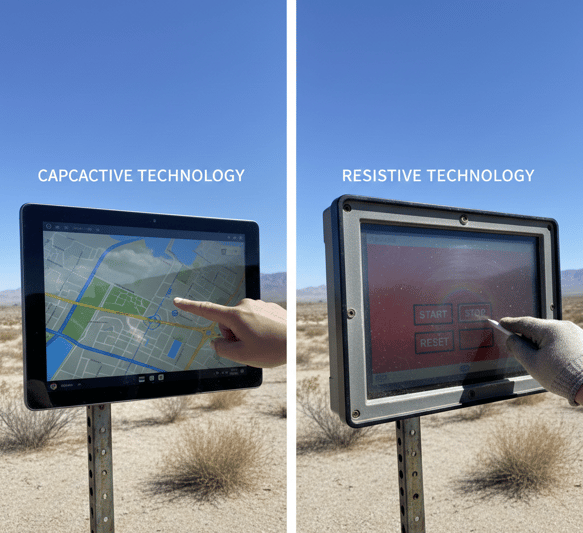
- 3. Touchscreen Compatibility: Capacitive touchscreens rely on precise electrical detection. Some materials require calibration or tuning to avoid interference.
- 4. Environmental Exposure: Harsh environments demand materials with resistance to:
- UV radiation
- Moisture
- Chemicals
- Temperature swings
- Mechanical stress
- 5. Mechanical Form Factor: Space constraints influence whether a thick mesh or slim film is appropriate.
- 6. Manufacturing and Cost: Shielding costs vary with material type, bonding techniques, and production complexity. High-reliability applications prioritize long-term value and certification over initial cost.
Combining EMI Shielding with Optical Enhancements
Shielding is rarely used alone. It is often paired with enhancements such as:
- Optical bonding
- Anti-reflective coatings
- Polarizers
- Heater integration
- UV protection layers
Combining EMI protection with optical optimization ensures that shielding does not compromise display performance. The integration must maintain:
- High contrast
- Low reflectance
- Stable touch performance
- Mechanical strength
Bonding the shielding layer eliminates internal reflections and increases durability, especially in rugged environments.
Testing and Certification Requirements
EMI shielding must comply with strict standards. Common testing includes:
- Radiated emissions testing
- Conducted emissions testing
- Susceptibility and immunity verification
- ESD testing
- Temperature and humidity cycling
- Shock and vibration resistance
Regulatory compliance may require adherence to:
- MIL-STD-461
- DO-160
- CISPR standards
- FCC requirements
- IEC safety certifications
Testing ensures that displays function consistently within critical electronic ecosystems.
Common Challenges in EMI Shielding Integration
- Optical Clarity vs. Shielding Strength: Stronger shielding materials may reduce brightness or introduce moiré patterns. Proper selection and alignment mitigate these effects.
- Touchscreen Sensitivity: Conductive layers can degrade touch performance if not properly engineered. Calibration and controller tuning are often required.
- Bonding and Adhesive Compatibility: Mismatched adhesives may cause delamination, especially under thermal stress.
- Manufacturing Alignment: Mesh and film patterns must align precisely to avoid distortions or visibility issues.
- Weight and Thickness Concerns: Rugged systems benefit from lightweight films unless extreme durability is required.
Case Applications Across Industries
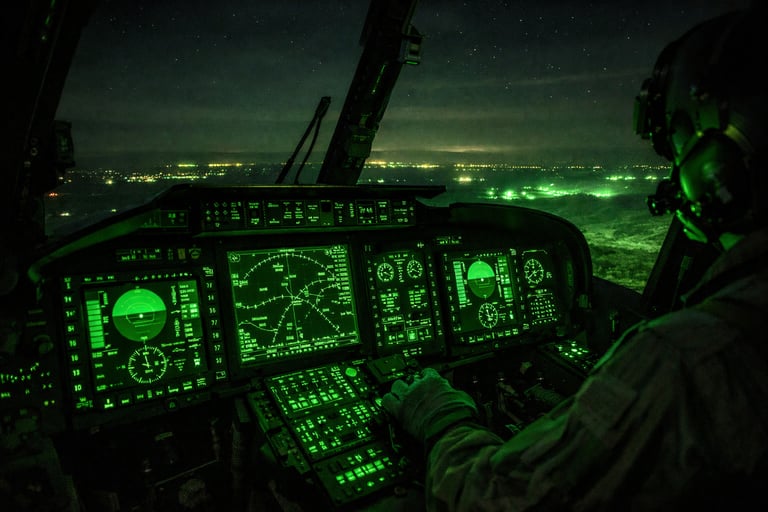
- Aerospace: Displays used in cockpits and avionics must withstand extreme EMI exposure from radios, radar systems, and high-power electronics.
- Defense: Rugged display systems require durable shielding materials that perform in harsh environmental and electromagnetic conditions.
- Medical Devices: Shielded displays prevent interference with imaging equipment, diagnostic systems, and monitoring tools.
- Industrial Automation: Factory environments contain motors, PLCs, drives, and RF systems, all of which require robust EMI protection.
- Transportation: Displays in vehicles are surrounded by communication modules, power inverters, and navigation systems.
- Marine: Shielding prevents interference from sonar, radar, and high-frequency communication systems.
Emerging Materials and Technologies
Innovations in EMI shielding continue to advance, including:
- Nanowire conductive films
- Hybrid mesh-film composites
- Silver nanomaterial coatings
- Highly transparent conductive polymers
- Flexible and bendable shielding layers
- Thinner materials with improved shielding effectiveness
These developments aim to strengthen EMI protection while improving optical clarity for high-performance displays.
How E3 Displays Ensures EMI Compliance and Reliability
E3 Displays provides complete EMI design engineering, including material selection, optical integration, bonding, testing, and certification support. The engineering team evaluates:
- System-level EMI behavior
- Environmental exposure
- Touchscreen requirements
- Optical clarity needs
- Mechanical constraints
Every display undergoes rigorous validation, including shielding effectiveness testing, thermal cycling, vibration testing, and optical analysis. E3 Displays integrates EMI filtering, shielding layers, conductive bonding, and rugged construction to ensure long-term reliability across mission-critical environments.
Engineering Protection That Performs Under Pressure
EMI shielding is not a single design decision—it is a system-level strategy that determines the reliability, clarity, and safety of custom display technology. The right material must protect electronic performance without compromising optical quality, touch accuracy, or durability. Whether the requirement calls for transparent shielding film or high-strength EMI shielding mesh, the goal remains the same: reliable performance under electromagnetic interference.
Connect with E3 Displays to develop EMI-protected display systems engineered for precision, clarity, and long-term reliability.

.png?width=80&height=80&name=image%20(82).png)