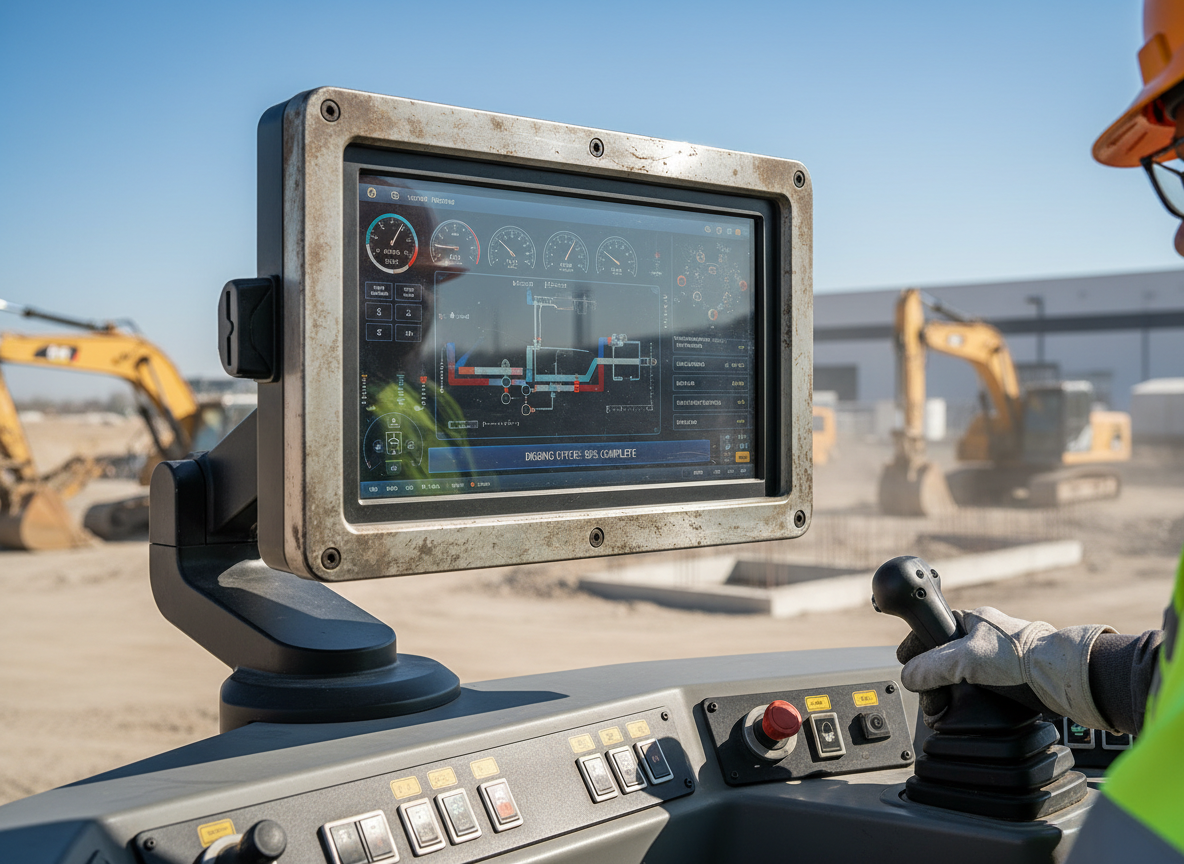

What Defines a Military Display? Key Differences from Commercial and Industrial Screens
A military touchscreen is not simply a reinforced version of a commercial display. It represents a purpose-built system designed to operate reliably in environments where failure is not an option. From battlefield vehicles to avionics and naval systems, these displays are engineered to perform under extreme physical, electrical, and environmental stress while maintaining absolute visual clarity and control accuracy. Unlike displays intended for office, retail, or even industrial automation use, military-grade designs prioritize survivability, long-term availability, and strict compliance with defense standards. These requirements define every aspect of the display, from materials and optics to firmware control and supply chain governance.
What Is a Military Display?
Military displays are engineered visual interfaces designed specifically for defense and aerospace applications. They are built to meet stringent military specifications for shock, vibration, temperature, electromagnetic compatibility, and operational longevity. Every design decision supports reliable performance in mission-critical scenarios.Military Displays vs Commercial Displays: Core Differences
Commercial displays focus on cost efficiency, aesthetics, and rapid product cycles. In contrast, military displays emphasize durability, controlled component sourcing, and repeatable performance across decades. Features such as reinforced glass, hardened electronics, and redundant design elements separate military-grade solutions from consumer screens.Military Displays vs Industrial Displays: Where the Line Is Drawn
Industrial displays are designed for factories, transportation hubs, and outdoor kiosks. While they offer higher durability than commercial products, they typically do not meet military qualification standards. Rugged military displays are validated against more severe environmental extremes and stricter electrical and mechanical tolerances.Environmental Performance Requirements for Military Displays
Military displays must operate across wide temperature ranges, withstand intense vibration, resist humidity and salt fog, and tolerate rapid pressure changes. Performance consistency under these conditions is mandatory, not optional.Compliance Standards That Define Military Displays
Military displays are commonly qualified to standards such as MIL-STD-810 for environmental testing and MIL-STD-461 for electromagnetic compatibility. These certifications ensure predictable behavior in harsh and electrically noisy environments.Optical Performance Expectations in Military Displays
Optical clarity remains critical even under direct sunlight or low-light conditions. Anti-reflective coatings, optical bonding, high brightness backlights, and NVIS compatibility are often required to ensure visibility without compromising operational safety.Touch Technology in Military Displays
Touch interfaces in military systems must support gloved operation, resist false inputs, and remain responsive under vibration. A properly engineered military touchscreen integrates projected capacitive or resistive technology with tuned sensitivity and advanced signal filtering.Electrical and Signal Integrity Requirements
Military displays require robust power conditioning, EMI shielding, and stable signal paths. These measures prevent interference from onboard electronics, communication systems, and external electromagnetic sources.Mechanical Design and Materials in Military Displays
Enclosures, mounting systems, and internal structures are designed for shock resistance and long-term mechanical stability. Materials are selected to maintain structural integrity under repeated stress and environmental exposure.Lifecycle, Availability, and Sustainment
Defense programs often remain active for decades. Military displays must support long-term availability, controlled revisions, and sustained production without forced redesigns due to component obsolescence.Supply Chain, Security, and Manufacturing Controls
Secure sourcing, traceability, and controlled manufacturing processes are essential. Military display programs require documented component origins and protection against unauthorized substitutions.Common Misconceptions About Military Displays
A common misconception is that ruggedized industrial displays qualify as military-grade. Without full compliance testing, controlled sourcing, and lifecycle guarantees, such displays fall short of true military requirements.Applications That Truly Require Military Displays
Military displays are essential in armored vehicles, command-and-control systems, avionics, naval consoles, and portable field equipment where failure directly impacts mission success.Why Purpose-Built Military Displays Reduce Long-Term Risk
Purpose-built designs reduce integration challenges, certification delays, and lifecycle disruptions. Investing in true military-grade solutions lowers long-term operational and maintenance risk.Understanding the True Definition of a Military Display
A military display is defined by performance under pressure, compliance with defense standards, and long-term reliability. E3 Displays designs and manufactures mission-ready display solutions tailored for defense and aerospace applications. For programs requiring uncompromising reliability and sustained availability, Military rugged displays engineered by E3 Displays provide confidence across the entire system lifecycle. Contact us today!Recent Blogs
-
January 07, 2026