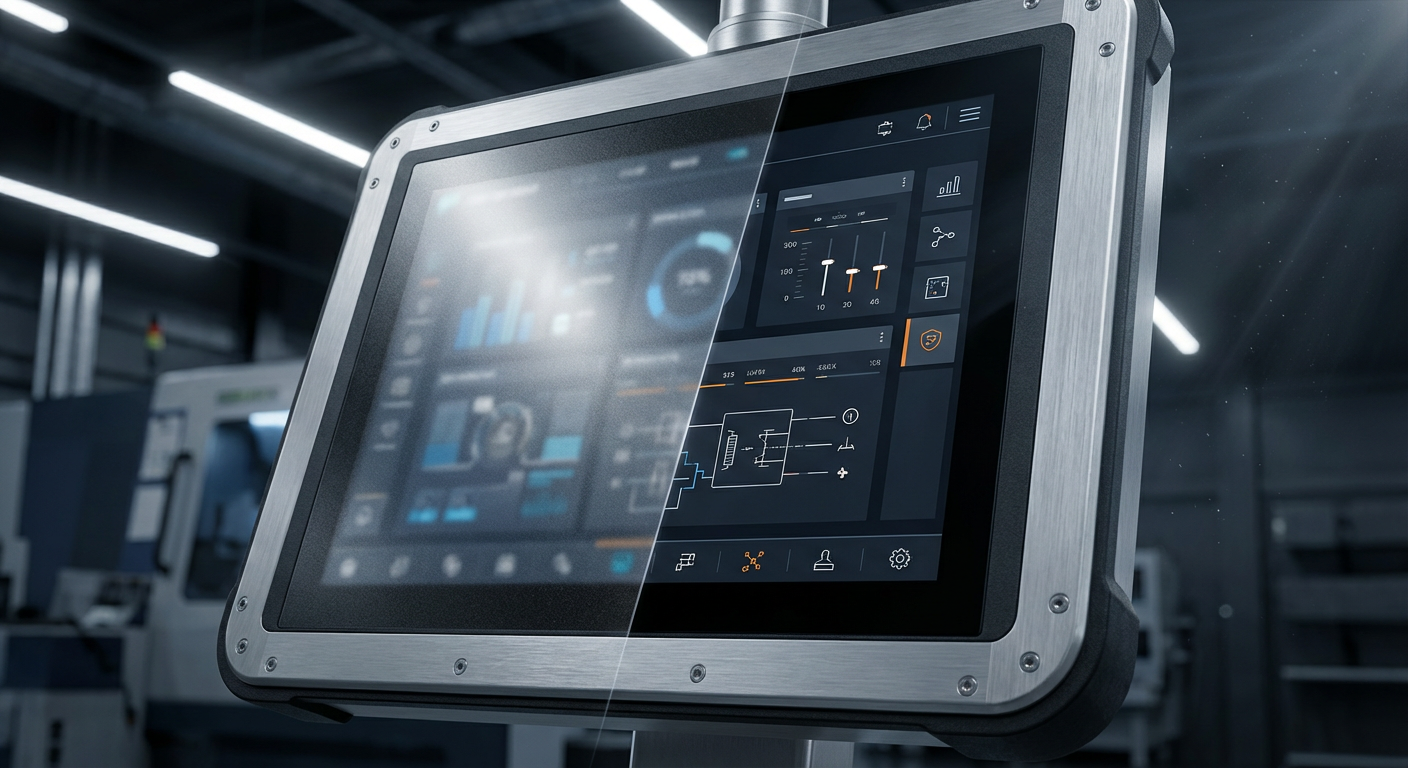
Selecting the right touch screen technology affects product performance, service life, and long-term support. For commercial and industrial equipment, the decision influences reliability in harsh conditions, regulatory compliance, and integration efficiency.
An ISO-certified custom display manufacturer in the USA provides the structure and engineering discipline needed to reduce risk during technology selection.
Why Touch Screen Selection Is More Complex Than It Seems
Touch screen selection involves multiple variables:
- Operating environment
- Expected lifecycle
- Enclosure design
- Glove or stylus use
- Optical clarity requirements
- Controller compatibility
Projected capacitive and resistive technologies behave differently under vibration, moisture, temperature variation, and repeated use. Cover glass thickness, bonding methods, and firmware tuning also affect responsiveness. A misalignment between touch technology and application requirements can lead to false inputs, calibration drift, or premature failure.
For OEMs and product designers, this complexity requires a structured evaluation rather than relying on component comparison alone.
What ISO Certification Means in Custom Display Manufacturing
ISO certification, such as ISO 9001 or ISO 13485, confirms that a manufacturer follows documented quality management systems. In custom display manufacturing, this includes:
- Traceable material sourcing
- Controlled production workflows
- Inspection and validation procedures
- Corrective action systems
- Design documentation standards
For touch screen technology, these controls ensure repeatability across production runs. Sensor grids, glass treatments, bonding processes, and controller programming remain consistent from prototype to full-scale production.
An ISO-certified custom display manufacturer in the USA operates within defined engineering and quality protocols. This structure reduces variability and supports long-lifecycle products common in medical, industrial, and transportation equipment.
How an ISO Certified U.S. Manufacturer Supports Technology Selection
Technology selection should start during the early design stages. A certified custom display manufacturer supports evaluation through:
- Application requirement analysis
- Environmental testing considerations
- Controller and interface compatibility review
- Mechanical stack-up assessment
- Lifecycle planning
Engineering teams assess expected operating conditions and recommend appropriate touch architectures. Sensitivity tuning, firmware configuration, and cover glass selection align with performance targets.
Structured documentation ensures that design decisions remain traceable. This approach supports regulatory compliance and future revisions without requiring redesign of the full interface system.
Comparing Touch Technologies Based on Use Case
Two primary touch technologies dominate industrial applications:
Projected Capacitive (PCAP)
- Supports multi-touch gestures
- High optical clarity
- Durable glass construction
- Suitable for sealed enclosures
Resistive Touch
- Responds to pressure input
- Compatible with non-conductive tools
- Typically lower cost
- Single-touch operation
Industrial HMIs, medical devices, and transportation panels often benefit from projected capacitive systems due to durability and multi-touch capability. Equipment requiring stylus-based or pressure-driven input may still use resistive technology.
An ISO-certified display manufacturer evaluates these trade-offs in the context of enclosure design, cleaning protocols, and long-term availability.
Risks of Choosing a Non-Certified or Offshore-Only Supplier
Suppliers operating without ISO certification may lack standardized quality documentation. This can result in:
- Inconsistent touch sensitivity
- Production variation between batches
- Limited traceability
- Delayed corrective action
Offshore-only sourcing without domestic engineering support can also slow integration cycles. Communication gaps and limited design collaboration increase development risk. For industrial equipment with extended lifecycles, supply continuity and firmware support become critical. Structured quality management reduces these uncertainties.
Why U.S.-Based Engineering Matters
U.S.-based engineering teams provide direct coordination during development. This benefits:
- Prototype review cycles
- Enclosure integration testing
- Firmware adjustments
- Optical bonding alignment
- Lifecycle planning
Time zone alignment and direct technical communication shorten feedback loops. Domestic engineering also supports compliance with industry regulations requiring documented validation processes.
A U.S. presence does not eliminate global manufacturing advantages. Instead, it strengthens engineering oversight and accountability.
Key Questions to Ask Before Finalizing Touch Screen Technology
Touch screen technology selection affects durability, compliance, and lifecycle stability. An ISO-certified custom display manufacturer provides structured quality management and engineering collaboration to support informed decision-making. Organizations developing industrial and commercial equipment can reduce risk by aligning touch technology with documented process control and experienced integration.
Before selecting touch screen technology, commercial and industrial teams should confirm:
- What environmental conditions will the system face?
- Is multi-touch capability required?
- Will operators use gloves or tools?
- What lifecycle duration is expected?
- How will firmware updates be managed?
- Does the supplier maintain ISO certification?
- Is domestic engineering support available?
Clear answers to these questions reduce integration risk and support predictable production outcomes. Contact E3 Displays to learn more about custom display and touch integration solutions.




 March 16, 2026