Outdoor and high-ambient environments quickly expose display weaknesses. Industrial panels that perform well indoors may lose clarity under direct sunlight. For OEMs and engineers looking to buy sunlight-readable monitors in the USA, brightness ratings alone do not define outdoor performance. Optical structure, surface treatments, temperature stability, and environmental protection determine long-term reliability.
The following technical factors help commercial and industrial buyers evaluate sunlight-readable displays with greater confidence.
1. High Brightness Alone Does Not Guarantee Readability
Many buyers focus first on brightness levels measured in nits. While high brightness is essential for sunlight-readable monitors, luminance alone does not ensure visibility in direct sunlight.
Outdoor readability depends on:
- Contrast ratio under high ambient light
- Surface reflectance levels
- Polarizer efficiency
- Backlight uniformity
A 1,000+ nit display without reflection control can still appear washed out. Effective sunlight-readable displays balance brightness with optical engineering that preserves contrast in outdoor conditions.
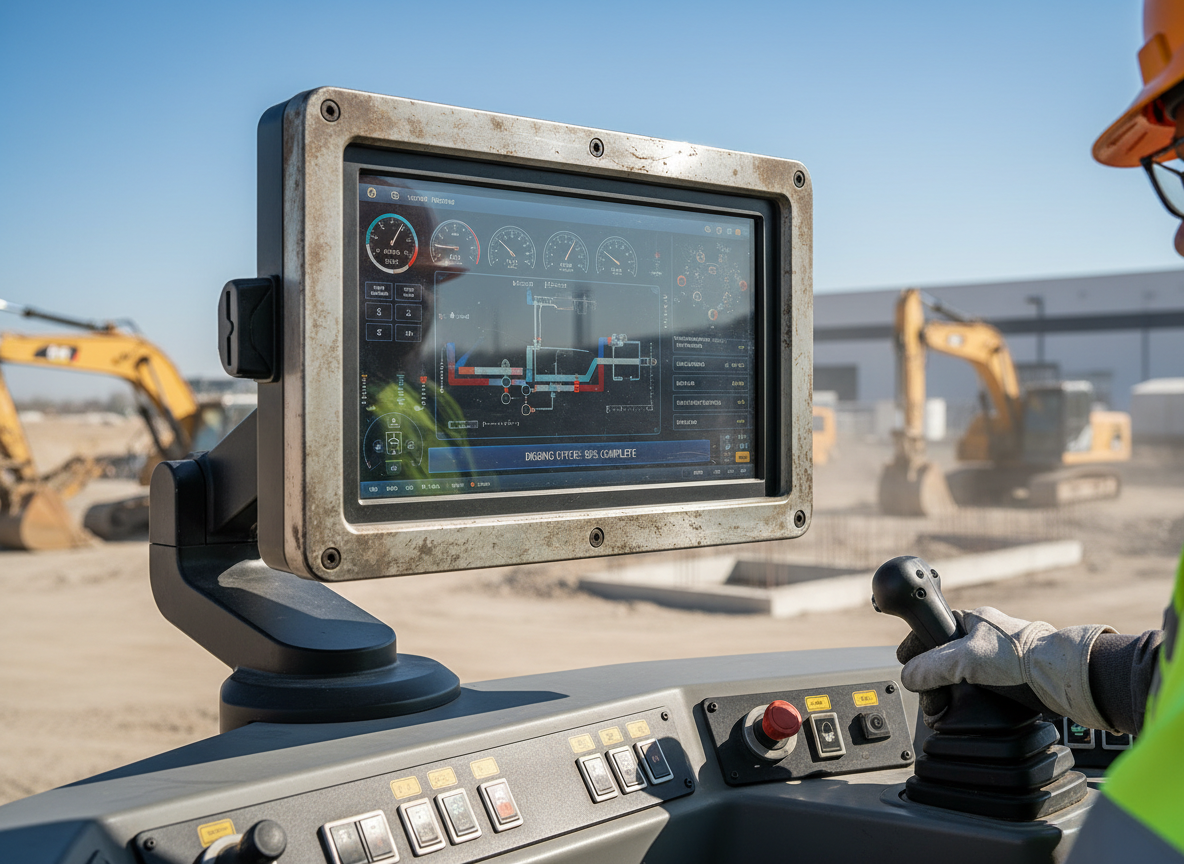
For industrial equipment, construction interfaces, and transportation controls, clarity under full daylight must remain consistent across viewing angles.
2. Optical Bonding Significantly Improves Outdoor Performance
Optical bonding eliminates the air gap between the display and the cover glass. This process reduces internal reflections that occur when sunlight hits layered surfaces.
Key performance benefits include:
- Improved contrast ratio
- Reduced glare
- Better durability against vibration
- Enhanced structural stability
Bonded sunlight-readable monitors maintain sharper image quality in outdoor kiosks, industrial HMIs, and rugged enclosures. In addition, optical bonding strengthens the display stack, reducing the risk of condensation and mechanical stress. For U.S.-based commercial applications, optical bonding is often essential rather than optional.
3. Anti-Reflective and Anti-Glare Treatments Are Critical
Surface reflections directly affect outdoor visibility. Anti-reflective (AR) coatings reduce light reflection at the glass surface, while anti-glare (AG) treatments diffuse harsh light.
When evaluating sunlight-readable displays, technical buyers should review:
- Total reflectance percentage
- Surface haze values
- Coating durability
- Scratch resistance
A high-brightness panel without AR treatment may struggle in environments with angled sunlight exposure. Combining brightness, optical bonding, and surface treatments creates a balanced solution for outdoor deployments.
Industrial buyers looking to buy sunlight-readable monitors in the USA often require consistent performance across multiple climate zones. Surface treatment selection plays a key role in maintaining uniform readability.
4. Operating Temperature Range Must Match the Deployment Environment
Outdoor monitors operate in wide temperature ranges. Direct sunlight increases internal panel temperature beyond ambient conditions. Cold environments introduce slow response times or image lag.
When sourcing outdoor-rated monitors for U.S. deployments, specification review should include:
- Operating temperature range
- Storage temperature tolerance
- Backlight thermal management
- LCD response time at extreme temperatures
Industrial and transportation systems often require extended temperature ratings. Thermal performance impacts long-term stability and component lifespan. Selecting a display rated only for commercial indoor use may lead to premature failure in outdoor industrial deployments.
5. Environmental Ratings Matter
Sunlight-readable monitors frequently operate in exposed environments. Dust, moisture, and vibration can compromise display performance.
Key environmental considerations include:
- IP ratings for water and dust protection
- Sealed enclosure design
- UV resistance of cover materials
- Impact resistance of protective glass
Commercial and industrial buyers in the USA must align environmental ratings with the deployment setting. Construction equipment, outdoor control stations, and agricultural systems require higher ingress protection than semi-sheltered installations. Environmental compliance contributes directly to long-lifecycle product performance.
6. Touch Technology Selection Impacts Outdoor Usability
Sunlight-readable monitors often integrate touch interfaces. Outdoor usability depends on selecting appropriate touch technology.
Projected capacitive (PCAP) touch panels provide:
- Multi-touch support
- High optical clarity
- Durable glass surfaces
However, sensitivity tuning is necessary for gloves or thicker cover glass. Resistive touch may operate reliably with gloves but reduces optical clarity.
For outdoor industrial systems, touch integration must be evaluated alongside brightness and surface treatments. Poor alignment between touch sensitivity and environmental exposure can reduce field usability.
Final Considerations for U.S. Buyers
Selecting outdoor industrial monitors for U.S. applications requires a system-level evaluation. Brightness, bonding, coatings, temperature ratings, environmental protection, and touch integration must work together.
Technical teams should review:
- Deployment environment conditions
- Lifecycle expectations
- Compliance requirements
- Integration constraints
Well-designed outdoor displays maintain consistent visibility and long-term durability in demanding environments.
Contact E3 Displays to find engineered sunlight-readable solutions designed for industrial applications.




 March 16, 2026