

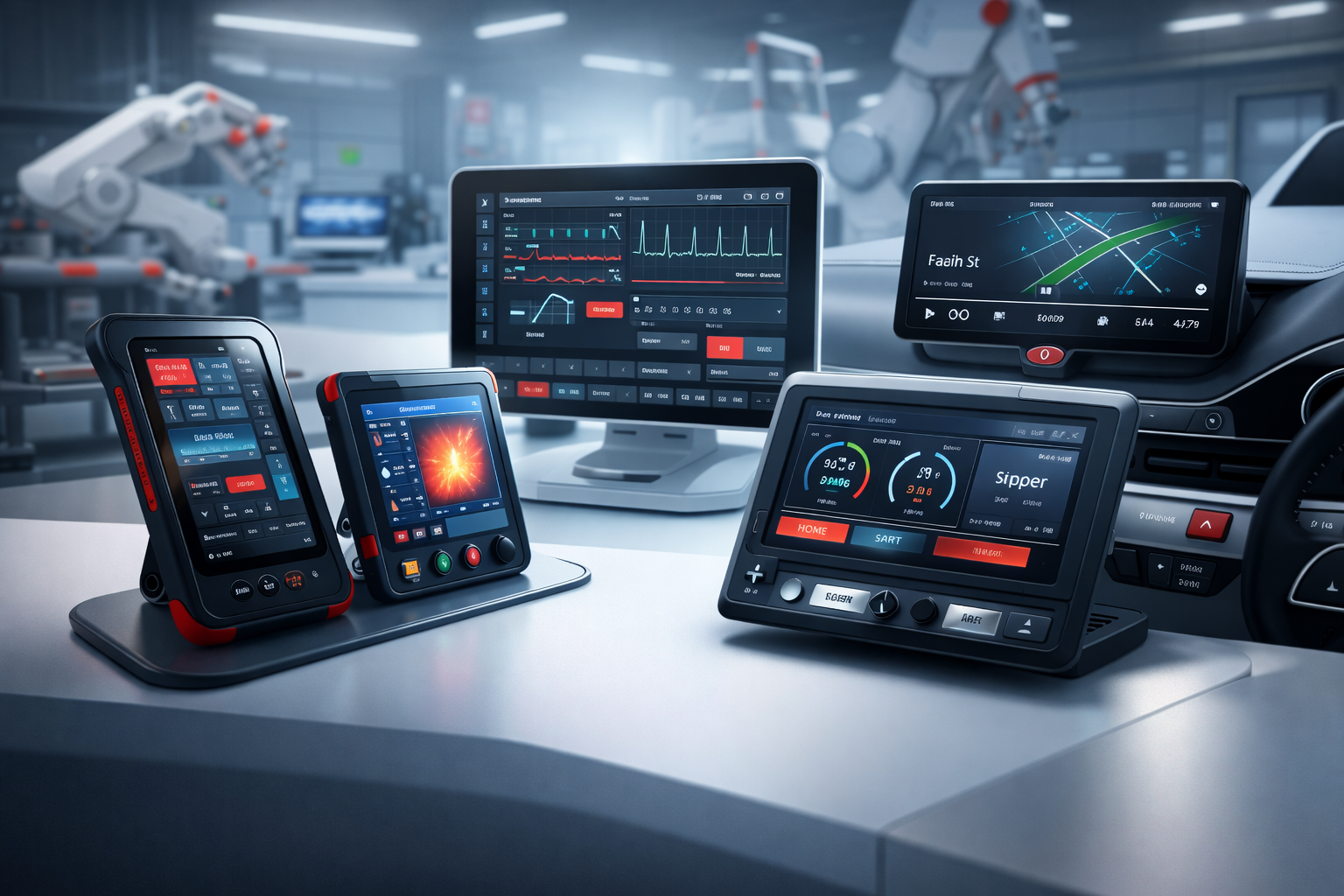
EMI shielding film is a transparent conductive layer, such as ITO or a fine metal mesh, laminated to or deposited on a display’s glass and connected to ground. It blocks electromagnetic and radio frequency interference (EMI/RFI) from entering or leaving the display while still letting the image show through. E3 integrates it into custom LCD and touch screen assemblies.
Radio Frequency Interference (RFI) and EMI Protection for Displays
EMI is known as electromagnetic interference which is a disruption from another source. EMI is also referred to as Radio Frequency Interference (RFI). EMI happens when the operation is in close proximity to a device that emits signals. EMI can be caused by a variety of different things such as telephones, Bluetooth speakers, microwaves, sensors and many more. E3 Displays offers EMI shielding film integrated into LCD screens which deters outside electromagnetic interference. No matter what industry you operate in, you want to have the security of knowing that you have a reliable display screen that performs with no interruptions.
E3 Displays is continuously developing innovative ways to combat EMI. EMI can cause power flows and spikes with undesirable effects on both data collected by medical equipment and the way medical devices interact with each other. Having EMI shielding is important for numerous reasons. One main reason is that it builds a shield that helps keep displays and nearby electronics operating without interference in commercial buildings. Some of the main benefits of EMI shielding are increased system reliability, normal operation of electronic displays and better function of a system without interruption.
E3 Displays’ EMI protection prevents electromagnetic interference from disrupting your display. EMI protection increases system reliability and data security, and helps reduce unexpected resets and reloads.
EMI Filtering vs EMI Shielding
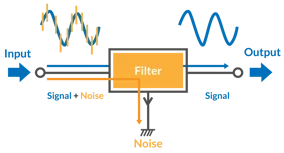
EMI Filtering
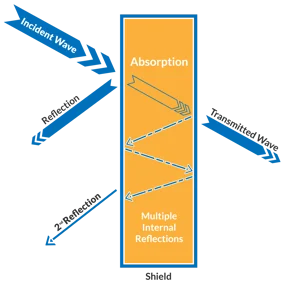
EMI Shielding
Transparent EMI Shields for the Viewing Area
A metal plate cannot cover the part of the screen people need to see, so the viewing area uses a transparent EMI shield instead. E3 Displays offers two main options for an EMI screen:
- ITO (indium tin oxide) coating: a thin, uniform conductive layer sputtered onto glass. It offers a clean, haze-free appearance and is often chosen when optical clarity is the top priority.
- Metal mesh film: a fine conductive grid laminated behind the cover glass. Metal mesh typically delivers stronger shielding than ITO, and the mesh pitch and angle are selected to avoid visible moiré patterns.
Both options can be combined with anti-reflective film and optical bonding to offset the light loss of the conductive layer and keep the display readable in bright environments.
EMI Touch Screens: Shielding PCAP and Resistive Touch Panels
An EMI touch screen adds a grounded shielding layer to the touch panel stack. This is common in military displays, avionics displays and medical displays, where equipment must operate near radios, motors and other emitters. Because projected capacitive (PCAP) sensors measure small electrical fields, the shield layer, touch controller and grounding scheme must be designed together so touch accuracy is not affected. E3 engineers design the full stack of cover glass, EMI layer, PCAP sensor and LCD as one assembly. Programs that must meet EMI/EMC requirements such as MIL-STD-461 or DO-160 can use this integrated approach as part of their system-level compliance testing.
Connecting to EMI Layers
EMI layers can be applied to the front or the back of glass layers. A conductive material is utilized across the plane of the glass that will overlap the product bezel opening. When this layer is connected to ground, the opening in the bezel now has a conductive path to manage EMI noise. E3 Displays most commonly applies these conductive layers to the back of the glass so the conductive medium is not exposed to the user and environment. In order for the EMI layer to be conducted to ground, a path must be established. Since the glass is sized to the display, E3 Displays will provide the glass with a conductive ink/tape that is located on the back of the glass at a similar width to the display bezel and wrap around to the front of the glass. An EMI gasket can then be used to connect through the established path and utilize the EMI layer.
Design Options for EMI Shielding Film

How to Specify EMI Shielding Film for Your Display
- Define the threat: identify nearby emitters, frequency ranges and any EMI/EMC standard your program must meet.
- Balance shielding and optics: weigh shielding effectiveness against light transmission, then choose ITO or metal mesh.
- Plan grounding: confirm bezel width and choose EMI tape, silver epoxy busbar or an EMI gasket for the ground path.
- Integrate with touch and bonding: design the EMI layer together with the PCAP sensor, optical bonding and any anti-reflective film.
Benefits EMI Protection Offers
Worldwide Availability
Your location does not limit your display potential. E3 Displays has worldwide availability on all of their products.
Custom Design
There is never a one size fits all display. E3 Displays works with you side by side to create a custom display solution made for you and your goals so you can have highly efficient and cost effective tools.
Guaranteed Performance
You need a display that is reliable and stands up to the toughest standards, which is why E3 Displays guarantees its thermal and EMI shielding performance.
Design Flexibility
There’s no need to design a completely new and complex display unit. With E3 Displays' multiple manufacturing processes, EMI protection can be easily incorporated into any design.
Our Experienced Team is Ready to Help
Our E3 Displays team has expertise in every type of display technology, whether big or small. We will help you choose or design the display that best fits your needs, while always keeping quality and budget in mind. Here at E3 Displays, we specialize in custom displays use our product selection guide today to get started on your project today!